Content warning - this article discusses suicide and assisted death.
Death is a word that carries a lot of baggage, varying from one person to the next. It provides us one truly fixed fact: one day we will all die.
The concept of death has been pondered over thousands of years of thought, tradition, and research. It is discussed through grief, science, ritual, the whole shebang. Our modern day social perspectives on death are shaped by this vast wealth of knowledge, but also by issues we face in the current day.
The fear of death and the desire to live longer fuels the industrial desperation to prolong life. A lot of funds are invested in research on how to live longer and the mainstream “health industry” places a lot of importance on length of life. These ideas appear in popular culture in a multitude of ways, especially since the advent of the internet.
Bryan Johnson is an American online influencer who became popular for his desire to “live forever” through an extremely regimented training plan, diet, and the use of strange experiments like swapping blood with his son. In an interview with Wired magazine, Johnson rambles about the science behind his journey and how he plans to “live forever”. He talks about an AI clone of himself he has been feeding personal information to that will take over when he dies, leaving behind some kind of legacy of the real person.
Questions of legacy come up a lot in conversations about death. Funerals and similar services are chances to remember the lives of the people who have died. There are a variety of traditions across cultures regarding death and memory. Paa Joe is a coffin artist based in Accra, Ghana who designs elaborate coffins in the shapes of items, animals, and even detailed scenes. These pieces follow a Ghanaian tradition of designing coffins to represent a person’s career, family, or something they were passionate about. Thousands of different traditions exist around death, each with their own brand of ritual relating to memory legacy, even if just through friends and family.
These societal factors like fear of death and the need to create a legacy contribute to larger conversations about how we see it. Social issues like rising suicide rates further impact the way we view death.
Mental health awareness has become a wellbeing buzzword in recent years. Much of this awareness has failed to take on an intersectional perspective and many groups affected the most by mental illness and disorders have been removed from the equation entirely. The rise in mental illnesses alongside very high rates of suicide and suicidal ideation among Canadians alone is enough to change the way we think about death. This is not even considering the drastically different suicide rates in minority groups like Indigenous Peoples.
There is still a great stigma surrounding mental illness which remains in Canadian society today, especially in conversations around death. The idea of having important conversations about mental health is wonderful and eyeopening, however in practice much of the ideas discussed are not implemented.
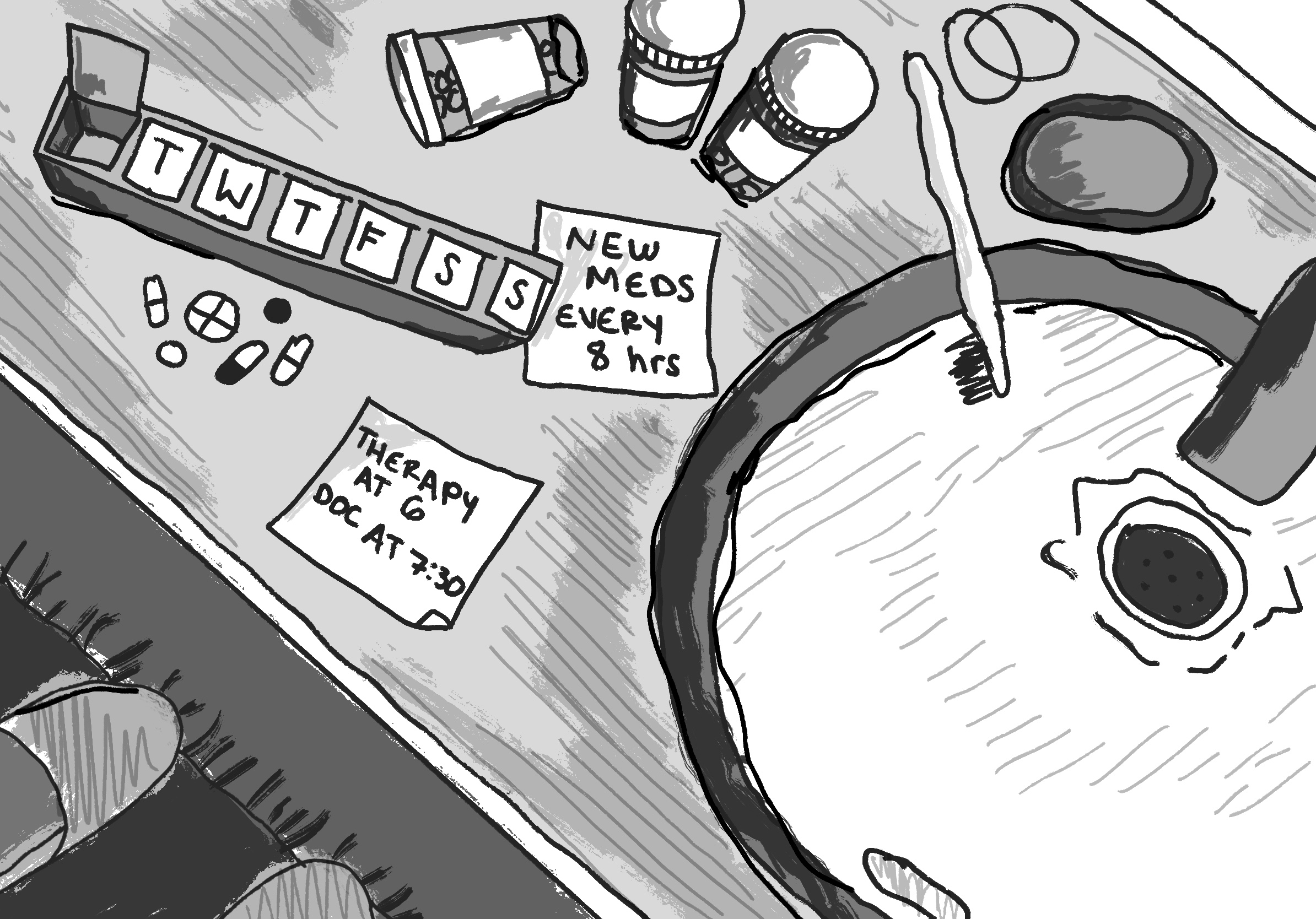
Part of the motivations behind writing this article stem from my own struggles with suicidal ideation and mental illness, as well as struggling within mental health institutions that only seem concerned with mental health when it becomes dire. Another part was also growing up and seeing others struggling with the same institutions around me and not having a place where they could talk about how they really felt or resources to better understand what they were going through.
When I was looking for resources on mental illness as a kid, I discovered a string of articles about assisted suicide in the Netherlands, where laws around assisted death extend to debilitating mental disorders as well as physical ones. One specific article was about Zoraya ter Beek, a 29 year old woman who successfully pursued medically assisted suicide for the treatment of mental illnesses she felt she could never truly recover from. She died in her home with her partner on May 22, 2024.
Reactions to her original decision to pursue assisted suicide and articles which carried the news internationally were mixed to say the least. Outrage was directed at ter Beek’s medical team for endorsing the idea that she had “reached the end of her treatments,” despite her continued mental suffering. A complicated issue that comes with mental disorders is that treatment is not as linear as diagnosis, medicine, cure. Though research has increased, many who have mental disorders struggle with them their entire lives.
Backlash to ter Beek’s story often stemmed from the implications of legal medical suicide. While assisted death laws in the Netherlands are strict and cases are subject to evaluation, there are concerns about the widespread implementation of assisted death for mental disorders. Europe is no stranger to the ways in which science can be abused to horrific degrees under the wrong governmental powers. Questions of who qualifies, who can consent to such a procedure, how do you determine when there are no worthwhile treatments left, and whether or not those barriers are imposed systemically all rose to the front of the conversation internationally.
Canada has experienced similar discourse with its own laws around assisted death, specifically with medical assistance in dying, or MAID. Canadians have been debating MAID since its legal inception in 2016. I remember learning about the case of Al Purdy in high school, a Canadian poet with lung cancer who was an activist for the national “right-to-die” movement. Even then, many opposed his final decision and called for the person who helped him commit suicide to be jailed.
Part of me agrees that giving the government power in this way could have dire consequences. A poll of Canadian opinions about MAID showed that 11% of Canadians interviewed were in favour of being unhoused as an acceptable reason to seek MAID. The implications of this statistic coupled with popular callous opinions about unhoused people in Canada is incredibly worrying.
Another part of me believes that the stigma surrounding death adds to the stigma of mental health and suicide. Suicide and suicidal ideation are incredibly complicated and situational. The word “suicidal”serves as an umbrella term which captures a far broader range of experiences which we have heard more and more of in the past couple of years.
Okuntakinte is a poet living in the Netherlands who gained notoriety for his openness about his decision to pursue assisted suicide. While a controversial figure for many reasons, it is undeniable that his Instagram page became a space where people could talk openly about death and their experiences with it, primarily from a mental health perspective. He would frequently post his own writing and respond to comments and direct messages he received, which were full of stories about loved ones struggling with mental illness and suicide, as well as stories from people who are actively suicidal.
This honest way of speaking about the process of death and grief was helpful for many who never saw their stories told in the mainstream. Judgments about the poet’s journey were not the main focus of his writing. Sitting with and thinking about the experiences and perspectives of others became central in that space.
One of the conversations sparked by these confessional works was on the topic of grief. Mental disorders do not just affect the people who must live with them. Symptoms affect the way in which the person interacts with the world, which has potential to be traumatic for friends and family. As the novel Olive Kitteridge speaks on, suicide always leaves behind traumatized people to mourn.
Okuntakinte speaks on how assisted suicide can allow for conversation and closure to occur before death, as well as how openness about suicidal ideation and death can lead to a greater understanding of the perspectives of mentally ill people. In an ideal society, perhaps these conversations being more common would alleviate some of the internal struggle. This is part of the aim of counselling and therapy: speaking about your experiences to better understand yourself.
Some of my first interactions with the idea of death came from classmates who struggled with their mental health. Suicidal ideation has been a part of the lives of many people I hold very dear even when I was young. When I was young I also really liked Bob’s Burgers.
The first episode is all about Bob and his family trying to prove their restaurant is not stealing bodies from the neighbouring crematorium and turning them into burgers. The episode progresses and the bizarre plot leads to all sorts of silly situations, but at the end, Bob says something that really stuck with me at the time. He shouts at a mob gathered in front of the restaurant, “Maybe we should treat our living better than we treat our dead!”
However silly the context, the message rang true to me. We embalm and ritualize death when it happens, we fear it, try to cheat it, ruminate about what happens after, but what of the living? Conversations around death and suicide should be had before they occur.
In an ideal society, perhaps we would not have rising rates of mental illness and suicide. Perhaps we could really focus on the systemic issues which contribute to rising rates and build a government which cares for those who need it most. Maybe our conversations about the option of assisted death and death in general would be more leveled.
Have these difficult conversations with the people you love. It is important to de-stigmatize these topics in our circles so when the people we care about are struggling, they feel like they can reach out. Talking deeply with my own friends and family about life and death makes me feel less alone in my own thoughts. Death is something we will all face in our lives, I think it is better we talk about it before it is too late.