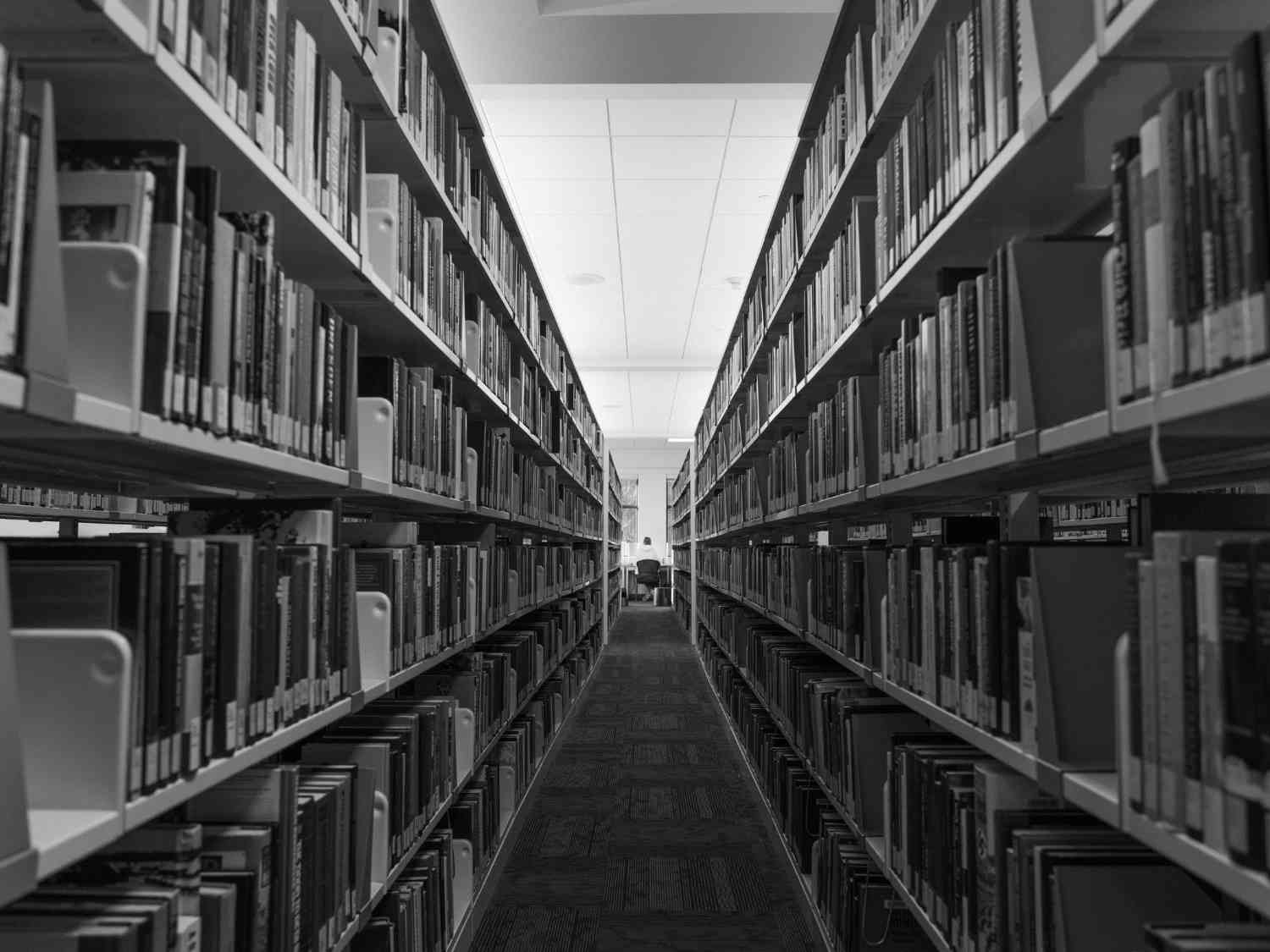
You know that generic image of a library that you carry around in your head? Warm lighting, endless wooden shelves, and one strict librarian in spectacles and a knitted sweater, shooting you a look every time you talk. That picture is funny, but it is also outdated.
However entertaining and on brand it might seem in movies and television shows, libraries have never been about that. Especially university ones.
On campus, our library is not just a hushed room full of books and forced silence. It is a system — a place that has been redesigned around how students actually live now, exhausted, overstimulated, half-focused, and constantly juggling multiple things at once.
In my second year, I was in the library at 9 p.m., proofreading a final essay, when I realized my in-text citations were probably wrong. I went to the desk for the first time, and within ten minutes, a librarian walked me through the citation style and fixed what I was missing. I left with a clean reference list and, more importantly, actual confidence in what I was doing.
But it is interesting how most students are unaware of the many services the library offers, as well as the wide selection of books that adorn the shelves next to which you study, next to which you scroll aimlessly through your phone. Somehow, most of us still treat the library like it is only two things — a place to lock in during finals, or a place to meet your friends and convince yourselves that you will be locking in.
The librarian does not just point you to a shelf and disappear. They can help you with all the behind-the-scenes work and more. When I spoke to the library staff on campus, the one common theme was not “we have so many books”; it was “we fix problems students do not even realize the library can fix”, the kind you usually try to deal with alone, by panic-texting a friend or emailing a professor for help.
One of the key and perhaps most underused services is also the simplest: booking one-on-one appointments with a librarian. Talking with Marjorie Mitchell, Talia Greene, and Heather Berringer — significant pillars of the library — made it obvious how much these sessions can cover. You can get help with citations, research strategy, and course papers, but also the less obvious stuff students get stressed about, like copyright rules, where and how academic work gets published, and how to keep your research data organized so it does not turn into a digital mess.
They will walk you through the wild mess of research for essays and papers, provide tricks most people only pick up after years of writing papers the hard way, show you how to find sources more efficiently, how to use databases, and many other shortcuts. They help you move from “I have so much information” to “I have such a coherent argument”.
There is a reason this service feels almost too good to be true: it is. Students do not use it enough. Multiple staff members told me about the same phenomenon in different ways: students assume librarians are too busy, that their question is dumb, or that asking for help is somehow embarrassing. The irony is that working with students is the part that many librarians enjoy most. The question does not need to be impressive; it just needs to be honest.
Greene, our Open Education Librarian, made the same point from a different angle. “Students should take advantage of reference appointments with librarians, especially for research and citations,” she said. “There is a stereotype that librarians are stuffy, strict, and serious, and I hate it because it leads to ‘library anxiety’, as if the library is all rules and you cannot relax there.”
Mitchell, the copyright, scholarly communications, and research data management librarian, put a final nail in the stereotype. “Librarians are not the enforcers of silence,” she said. She loves the first-floor hum because the library designed spaces intentionally for different moods and different kinds of brains.
If you have ever spent hours Googling a topic and ended up falling down rabbit holes with half-truths and conflicting headlines, this is where the library comes in. The library helps you sort through the noise and focus on what is real. Sure, generative AI is everywhere now, and most of us lean on it for research and writing. But the library gives you something AI cannot: know-how.
AI can sound correct; it can sound polished. Although it might be the easiest, quickest, and most convenient way to get anything you need done, it does not always know what is true, and it does not always know when it is wrong.
This is where librarians feel almost underrated in 2026. When information is infinite and confidence is cheap, being able to tell the difference between “convincing” and “correct” becomes the real skill. When asked about generative AI versus librarians, Mitchell had a lot to share. “Librarians can find multiple sources to support your argument and provide confirmation that the info provided is absolutely correct. AI just provides plausible, convincing answers pulled from everywhere, whereas librarians provide answers from only a set of reliable, valid sources that are factual.” She explained. “Most importantly, librarians will tell you when you are wrong and help you find the correct thing. We can tell you when a source is sketchy, when your logic is not supported, when you may need more evidence.” The difference is simple. AI can give you a polished paragraph, but librarians give you proof.
If there is one place the library quietly saves students from disaster, it is in the world of citations, especially for first-year students who do not have a strong grasp of different kinds of citations and are intimidated by essay-writing. Instead of looking up crash courses online or turning to ChatGPT, all you have to do is talk to a librarian.
It turns out that a lot of citation errors come from the same source: people do not know what they are looking at. A PDF looks like a PDF. A title looks like a title. But citations require specificity. When you are exhausted, it is easy to slap together a reference list that looks formal enough to pass, even if it is not technically correct. Librarians see these patterns all the time, which means they also know the fastest way to fix them.
The library simultaneously provides tools for success and shows you how to use them. If you are overwhelmed by sources, a subject librarian can help you find what matters and cut out the noise. If you are stuck in a database doomscroll, they can show you how to search smartly. If you are building a thesis or a big project, they can help you map out your research, so you are not reinventing the wheel every time. Most students learn these skills through trial and error. The library lets you skip the error.
Copyright is the other silent stressor, especially for students working on creative projects, posters, presentations, and long research papers. A lot of students assume copyright only matters in some official, legal sense, like something that happens to corporations and celebrities. But it shows up in student work constantly: using images in slides, quoting longer passages, uploading work publicly, building a portfolio, including figures in a paper, and submitting a thesis or dissertation. The library can advise on what is allowed, what is risky, and what you need to do to be safe.
But perhaps the most engaging part of the library is the pocket branch. In conversation with the library staff, I found out that there is a little corner in the back of the library where students can access public library books. All you have to do is get a public library card, and you can order any sort of book you want, be it romance, fantasy, fiction, or poetry.
This matters because the UBCO library collection is, understandably, academic-heavy. But students still want books that feel like a break. The pocket branch is a small, almost hidden way the library acknowledges that.
The staff notices what students are choosing when they do read for themselves. Berringer said romance has been huge. The library even built a display around so-called “romantasy,” because students were clearly drawn to it. She named the rise of YA, dark academia, and romantasy as the most desired books among UBCO’s student population, with a general surge around popular series.
Ironically, university is where you get assigned texts that require highlighters, tabs, and caffeine. Then you walk into the library for a “serious study session” and secretly want a book that lets you disappear for a few hours.
Greene’s own recommendations match that range. For pleasure reading through the campus library, she listed The Goldfinch by Donna Tartt, Nickel Boys by Colson Whitehead, and Never Let Me Go by Kazuo Ishiguro. She also pointed out that graphic novels can be “a nice respite from schoolwork,” naming Maus by Art Spiegelman and Persepolis by Marjane Satrapi.
Below is a curated list by Berringer, our Learning and Curriculum Support Librarian. Her advice for students who cannot finish books anymore was to not force themselves.
- Knott, H. (2023). Becoming a matriarch. Knopf Canada.
- Mandel, E. S. J. (2014). Station eleven. Alfred A. Knopf.
- Marvel, K. (2025). Human nature: Nine ways to feel about our changing planet. Ecco, an imprint of HarperCollins Publishers.
- Saint-Exupéry, A. de. (2000). The little prince (R. Howard, Trans.; 1st ed). Harcourt.
- Adichie, C. N. (2015). We should all be feminists. Anchor Books.
- Le Guin, U. K. (1987). The ones who walk away from omelas. The wind's twelve quarters. HarperCollins Publishers. https://ebookcentral.proquest.com/lib/ubc/detail.action?docID=29436920
- Wallace, D.F. (2005). This is water by David Foster Wallace (full transcript and audio). https://fs.blog/david-foster-wallace-this-is-water/
“Try short stories, try something you can commit to without feeling trapped,” she suggested. “I’d definitely recommend Peacocks of Instagram by Deepa Rajagopalan as a short story pick!”
If even more reading is not the break you want, the library still has options that students do not take advantage of enough. Greene noted the library offers streaming platforms students can access, including Kanopy, Criterion on Demand, and Audio Cine Films. The library also lends out “fun collections”, including games and items you can borrow on short loans.
The library has something for everyone. So, ask yourself, are you using the library or just sitting in it?