Politics have long been explored through art. Instead of grovelling at the feet of politicians and judges for change, artists craft ways to stir others to action. Sometimes they let unseen issues turn into something you cannot rip your eyes from. Art is a means of moving people through emotion; it has continually been used to guide feelings of the individual towards a certain conclusion, whether it lands correctly or not.
From 1930s jazz to 2010s progressive rap and everything in between, music has long reflected attitudes towards the state of democracy in the United States of America. In their 2025 list of the best protest songs, Rolling Stone stated that: “for some marginalized groups, the simple act of creating music at all can be a form of speaking out against an unjust world.”
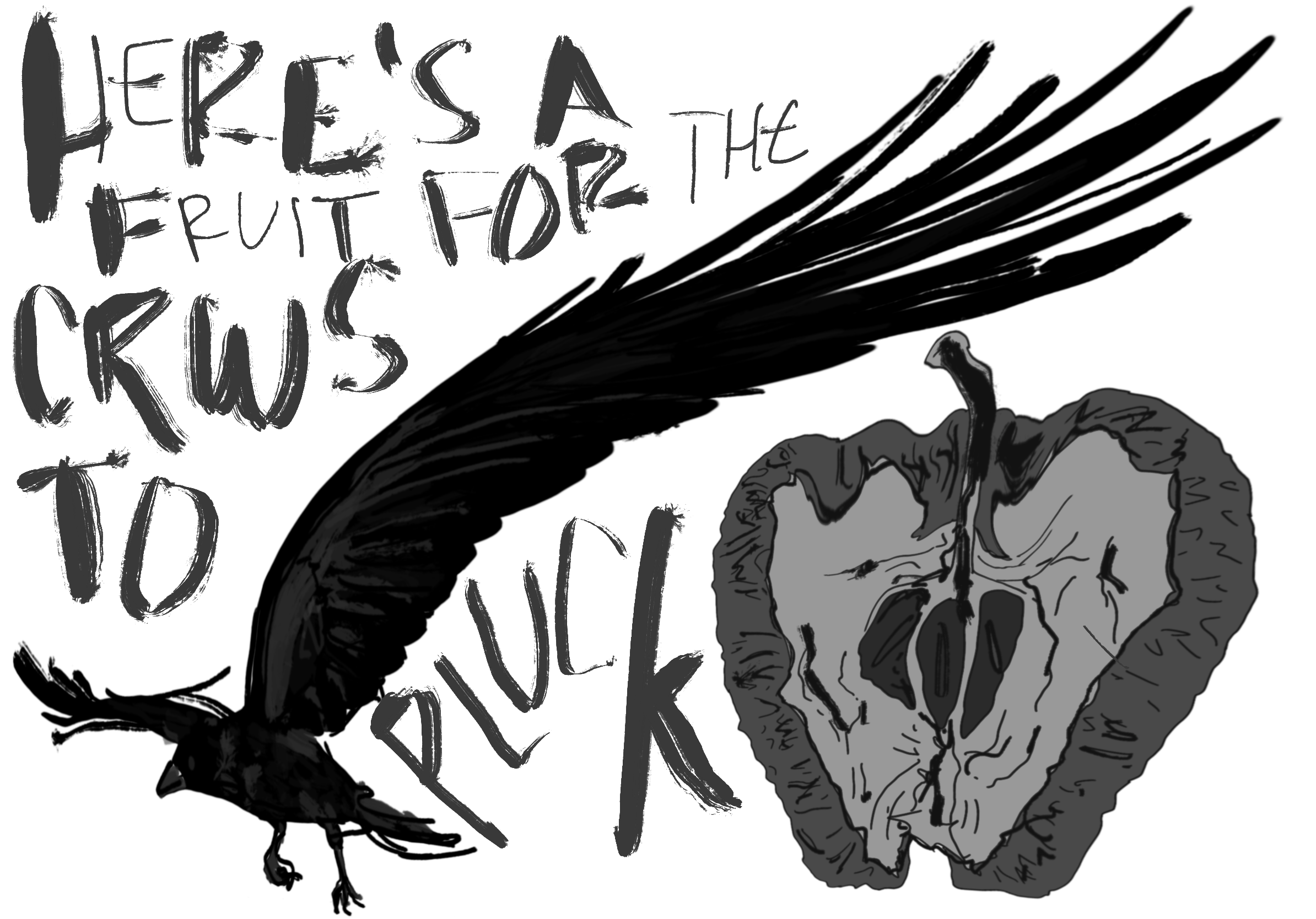
Upon proposing to record a sung rendition of the poem “Strange Fruit”, Billie Holiday was rejected by her record label as they thought the lyrics would be too controversial. Instead of bowing her head, Holiday jumped to the independent Commodere Records who would let her record the song, which was released in 1939.
The contents of the song were perceived as contentious due to the blunt metaphor for racialized violence towards African Americans in the USA. The victims of lynching are compared to slowly rotting fruit hanging from trees in the South:
“Southern trees bear strange fruit / blood on the leaves and blood at the root / black bodies swinging in the southern breeze / strange fruit hanging from the poplar trees.”
The poem “Strange Fruit” was originally written by Jewish American Abel Meeropol in response to seeing photos of the lynchings of African Americans in the South. Photos of lynchings were shockingly common form of memorabilia in drug stores and pharmacies. Black men were the primary target of lynching, and continually lived in fear of being accused of violating Jim Crow regulations and facing unnjust repercussions. Perpetrators of lynchings very rarely faced any form of consequences for their actions; systemic structures such as all white juries sheltered these heinous crimes from ever properly facing the law.
“Strange Fruit” was important in the advancement of rights for African Americans as it brought attention to ongoing issues during the post-Reconstruction era. Lynching and other forms of racialized violence were prevelant, but rarely made the news. Holiday’s choice to speak out was a brave choice: others who had protested in this era lost their jobs, were barred from performing, and faced social oppression.
With a bitter perspective on social justice, Holiday still manages to capture the essentiality of speaking out against what is wrong, even at the risk of drastic consequences.
Sitting idly by while injustice burns on causes change to become stagnant. Gil Scott-Heron’s 1971 song “The Revolution Will Not Be Televised” addresses how social change cannot occur while the affected groups remain immobilized, waiting for someone else to get their hands dirty in the name of freedom. To Scott-Heron, transformative change will not be featured on the evening news, after viewer’s advertisements, or any form of mass media; it will occur on the streets and requires involvement.
In Scott-Heron’s youth, he was very politically active and felt the impact of the Kent State Massacre, where four students were killed during a protest against the Vietnam War. The massacre sparked widespread student-led strikes across the country for the violation of the right to protest.
“The Revolution Will Not Be Televised” takes advantage of advertising slogans from the era, like “the revolution will not give your mouth sex appeal,” which was from a toothpaste advertisement; or how “the revolution will not make you look five pounds thinner,” a common weight loss advertisement slogan. These lyrics reject distractions that keep people glued to screens instead of participating within their community to enact change.
Scott-Heron sings that “there will be no highlights on the eleven o’clock news,” that there “will be no re-run,” and that “the revolution will be live.” Stressing the importance of active participation in politics is crucial in this piece, showing that if you do not participate there will be no chance for you in the future. Participating comes with engaging with reality, not some cut down version of the truth.
If you tuned into the 2025 Superbowl LIX halftime show, you may remember Kendrick Lamar’s reference to Scott-Heron’s song, opening by stating “the revolution ‘bout to be televised / you picked the right time but the wrong guy.” Lamar’s performance focused on systemic injustice and empowering African Americans, and the reference to Scott-Heron’s song is a signal that change can still be made in spite of systemic barriers.
It certainly is ironic to reference a song which critiques corporatism and advertising during an event notorious for its costly advertisements and overpriced tickets. However, choosing to encourage participation in social change at the most watched television broadcast in the USA every year is a bold choice.
Offering an outsider’s perspective, Canadian singer-songwriter Leonard Cohen wrote the song “Democracy” in 1992, offering a commentary on the idea of the USA serving as a laboratory for the democratic experiment. Cohen’s writing does not shy away from a critical view of work that still needed to be done to kick democracy into high gear.
The lyrics of “Democracy”, such as “[it’s coming] from the fires of the homeless / from the ashes of the gay” condemn the causes behind the growing homeless population during the late 1980s, as well as the poor governmental response to the AIDS epidemic and rising stigma against queer Americans. Commentary on social cleavages “that [go] down in every kitchen / to determine who will serve and who will eat” evaluate the racial divide in the service industry and the place of women in the home.
To Cohen, these instances of inequality show where democracy stems from. Gaps between justice and injustice, equality and inequality, freedom and unfreedom, are all the spots where democracy is most needed — as he sings in his 1992 hymn “Anthem”,“there is a crack in everything, that’s how the light gets in.” In a 1993 interview with MTV, Cohen proclaimed that democracy is “not coming from the legislature, not from above; but from the bottom, from a crack in the wall, from a hole in the air, imperial, mysterious, an amorous array.”
As “Democracy” was written during the fall of the Berlin Wall, Cohen writes with the perspective of democracy being something that the USA can give to other nations. This perspective at the time came from watching the USA’s consistent pressure against Soviet expansionism during the Cold War period, and Cohen stated in an interview:
“[Democracy] is the great gift of the Americans — to this veil of tears in which we live — this suggestion that there might be a kind of life that is not brutal, meaningless, and insignificant; a world in which there really is a sense of fraternity, equality, and justice. Now as far as we are from those ideals, there is something in the American psyche that holds onto this and that comes up with glimpses of that kind of illumination.”
Staying true to his disapproval of the imperfections of the practice of democracy in the USA, Cohen sings “I love the country but I can’t stand the scene,” and that he is “neither or right,” trying to remain non-partisan in his take on the American case of democracy.
This perspective remained hopeful as things were looking up for the expansion of democracy across the globe, but unless institutions and individuals remain committed to change for the good, it will not come.
In one of the most famous anti-American protest songs, Green Day wrote “American Idiot” in 2004 after former President George W. Bush’s response to the 9/11 terrorist attacks. The song critiques the War on Terror, which featured a restriction of liberties of American citizens for the sake of safety.
Lead singer Billie Joe Armstong sings “welcome to a new kind of tension,” inviting Americans into the new norms forming in the country such as the Transportation Security Administration (TSA), kickstarting the war in Iraq, and increased security out of fear of more violence. The song fears the consequences of these measures, seeming to question if these changes are in line with the American ideal of freedom.
Concerned about growing xenophobia in the USA, Armstrong sings: “now everybody do the propaganda / and sing along to the age of paranoia,” encouraging people to form their own beliefs instead of blindly trusting government narratives. Especially in a period of high tensions after a national tragedy, utilizing the paranoia of the vulnerable can be dangerously effective.
In recent years, the song has been repurposed to protest against President Donald Trump. At various concerts after Trump’s first term in office, Armstrong changed the lyrics “I’m not a part of a redneck agenda” to “I’m not a part of a MAGA agenda.” Armstrong is openly critical of Trump, and sees him in line with this American idiot character he has crafted in his musical work.
Even though much change has occurred in the USA since Holiday’s era characterized by extreme violence against African Americans, alongside widespread systemic injustices embedded into American institutions, there are still plenty of ways the American context can improve its implementation of democracy.
While having lyrics rich with meaning, the value from Childish Gambino’s 2018 song, “This is America,” is ever present in the music video. Childish Gambino, whose real name is Donald Glover, draws attention to modern issues faced by African Americans in the USA, critiquing gun violence, systemic inequality, and the reception of African American culture.
The music video, directed by Hiro Murai, contrasts peace and unrest by depicting Glover dancing with youth while violence ensues. Fires burn, a church choir is massacred, and angry mobs charge at out-of-frame targets. Glover is shown at the beginning shooting a man playing a guitar, portraying the unnecessary violence perpetrated against African Americans. Police cars in the background of the video serve as a reminder of the police brutality that African Americans disproportionately face.
This imagery alongside the music questions if the viewer will remain ignorant of the ongoing issues, or if they will speak up to make real change. The music video means to stir unease in the viewer, making them reflect on systemic challenges present in the USA and beyond.
One attitude remains consistent throughout these eighty years of music: for change to happen, action must happen. Do not let injustice go ignored, speak up for those who cannot speak for themselves. There is no such thing as a perfect regime, but that does not mean a state should not seek equality and freedom for its citizens. Direct action is what matters most — cheering from the sidelines is a great way to win a sports game, but not a fight for social justice.