
What makes you, “you”? It is not just your face or your personality; it is your memories. The people you love, the songs that get stuck in your head, the stories you carry, all those little experiences shape how you move through the world. Now, imagine that very foundation starts shifting over time. This is the reality for many living with cognitive decline and dementia.
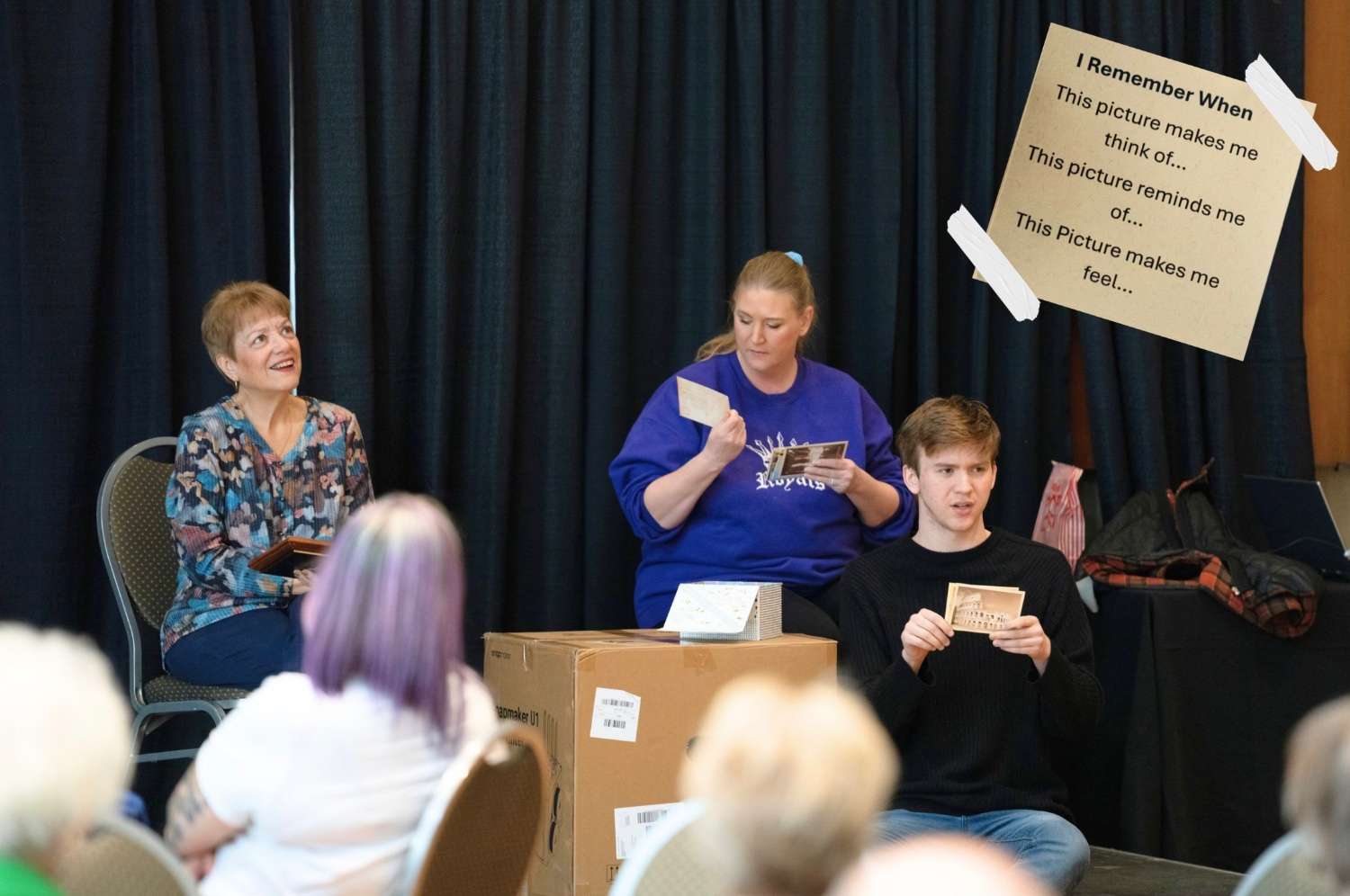
On March 2, 2026 the Memory Café took place in the UNC Ballroom with over fifty attendees. The event welcomed people with cognitive decline and dementia, their families, their caregivers, and community members to connect and learn about supports, so that we as a society can become more dementia friendly.
Memory Cafés, according to the program organizers, are designed for connection and not pity. They are meant to make dementia feel less like something that is whispered about in private, and more like something we can talk about, learn about, and respond to as a community.
The afternoon started with reminiscence therapy, a non-pharmacological approach that uses sensory cues like photos, music, and physical items to help people recall past experiences. Each table had printouts of scenes and objects, and people took turns sharing what it reminded them of, be it a person, a job, a childhood memory, or a smell.
One man shared how a picture he saw reminded him of the smell of Old Spice and a one-night stand from decades ago, making the room erupt in laughter. You realize how many memories live in everyday things, and how quickly they can bring someone back to themselves, even if only for a moment.
From memories, we moved into something more playful: improv. Each table was given a physical object, and the task was to build a story together using the classic improv rule, “yes, and.” There were cowboy hats, measuring instruments, fruits, and more. The point was to practise responding with openness instead of correction. “Yes, and” is one of many improv games that help caregivers understand how to be more present with a dementia patient.
Barb Stewart, the program manager and organizer, described the cafés as more than a one-off gathering. “Memory Cafés are participatory action research pilots,” she shared. “As action, we are searching for more ways to build dementia-friendly communities. We are closely looking at what works, what does not work, and getting answers from the community. We are on our knees searching for answers because it is a pressing issue now.” You could sense the urgency in the room. Dementia is not an abstract topic when you have watched someone you love live through it.
This was highlighted in Postcards from Yesterday, a short musical by the Showtime Theatre Company from Penticton. The play explores memory loss not only as an individual experience, but as something that changes relationships. The musical uses familiar songs, and it was heartwarming to see people in the audience join in when “You Are My Sunshine” and “Whatever Will Be, Will Be (Que Sera, Sera)” played. The play creates comfort through familiarity while making room for memory to surface.
The musical was followed by a brilliant Q&A panel with researchers, caregivers, people with careers in gerontology, and someone who has been living with dementia for ten years. The panel focused not only on medical care and facilities, but also on the community aspect — what makes an environment safer, kinder, and more usable for people living with dementia and their caregivers.
Everyone present in the audience was attentive and enthusiastic about understanding how communities could help. They spoke about the need for better facilities and programming, but also more subtle issues that shape everyday life, from stigma and education to accessible support groups and the emotionally overwhelming experience that caregivers go through while trying to keep everything afloat.
Pamphlets and resource cards covered every table, providing information about dementia, cognitive decline, and caregiver support. It was information you could take home, but it also showed that this is not a problem families have to figure out alone.
One line that was shared during a discussion struck a chord: memory is not just what happened, it is what we carry with us. The love, the laughter, the stories. Even when details shift and things become vague, the meaning does not disappear. Memory Cafés run across BC. They offer a model of what it looks like when a community chooses to respond, not with ignorance or avoidance, but with programming, conversation, art, and genuine care.



.png)

