As we navigate through the beginning of 2026, conversations about resource security are growing increasingly important. No longer is a potential water crisis a looming shadow of the future — it is a present reality. This year, United Nations scientists officially declared that the world has entered “global water bankruptcy.” With freshwater demand projected to be 40% higher than what can be supplied by the end of the decade, the eyes of scientific and industrial worlds have turned toward the most abundant, yet undrinkable source of water on our planet: the ocean.
For decades, desalination has been viewed as an expensive last resort. It has long been criticized as a massive energy consumer, and a potential nightmare for marine life. However, a convergence of material science breakthroughs and a high need for climate-resilient infrastructure has transformed desalination into a core strategy to meet the needs of current freshwater demands.
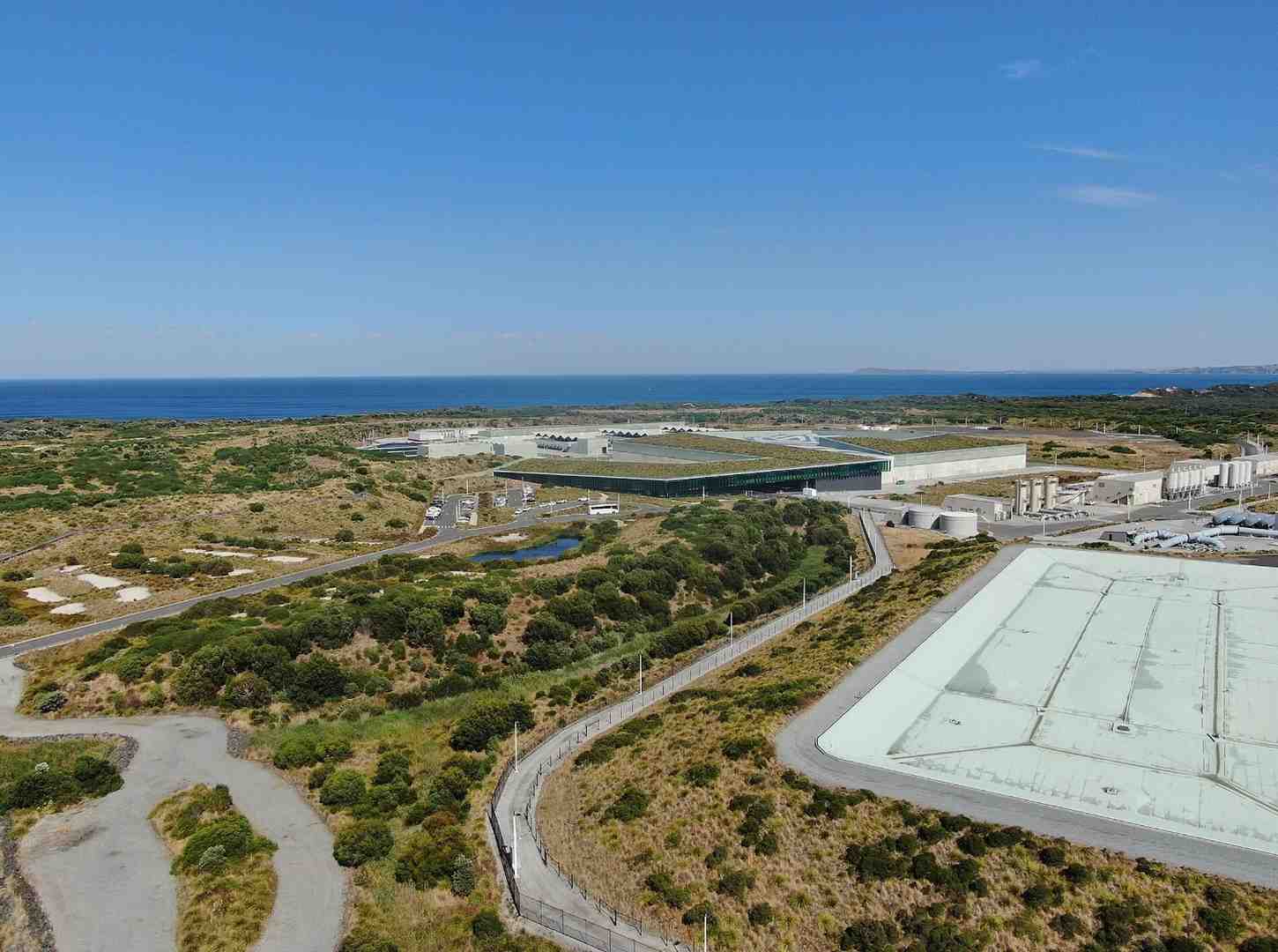
Historically, desalination was synonymous with massive, multi-million or billion-dollar facilities like the Sorek plant in Israel. While effective, these kinds of plants are capital intensive and prone to geopolitical risks. Recent events, including event targeting of water infrastructure systems, have helped display the vulnerability of centralized systems.
In response, 2026 has seen movement towards decentralization and modularity. Using modular units allows cities to deploy desalination capacity in months rather than years.
At the heart of modern desalination lies reverse osmosis (RO). The physics is quite simple at a basic level: dirty water is pushed through a semipermeable membrane at high pressure, leaving dirt behind and creating drinkable water.
The energy that is required to overcome the natural osmotic pressure of seawater is quite high. The theoretical minimum amount of energy required for desalination is roughly 1.1 kWh/m3. For years, traditional polyamide, cellulose acetate, and polysulfonate membranes operated far above this limit, requiring massive amounts of electricity to force water through.
However, within the 2020’s we are now witnessing the industrial-scale rollout of graphene oxide (GO) and biomimetic membranes., Graphene, a single layer of carbon atoms, can be punched with holes so precise they allow water molecules to get through while blocking larger molecules.
Even more futuristic are aquaporin-based membranes. Scientists have successfully synthesized “biomimetic” channels that mimic the protein pores found in human kidneys and plant roots. Their pores are naturally designed to transport only water molecules, making the filters a very interesting and promising technology if developed correctly.
While RO dominates the market, 2026 is seeing a resurgence in thermal desalination, specifically in solar-driven interfacial evaporation. Traditional thermal plants boiled entire vats of water, which is not exactly the most efficient. New technologies use complex 3D structured materials, such as porous graphene spiral rolls, that float on the water’s surface. These materials localize solar heat exactly where the water meets the air. This allows the transformation of water into steam to be done with a much greater efficiency.
However, there is a major problem with water desalination — brine, a super salty, chemical-laden wastewater pumped into the sea. For every liter of freshwater produced, roughly one and a half liters of brine is created. In 2026, the desalination industry is attempting to pivot towards a circular economy model known as brine mining.
Rather than viewing brine as a pollutant, engineers are trying to treat it as a “liquid mine.” Through a process called zero liquid discharge (ZLD) industrial plants are now extracting valuable minerals from the toxic foam. For instance, high-purity lithium batteries for EVs are being created through the industrial process.
As the freshwater business pivots, the ability to produce it is no longer just an engineering goal, but rather it is a matter of national independence. Jordan’s recent $6 billion investment in the Amman-Aqaba Water Desalination and Conveyance project is a testament to this. In Jordan, desalination offers a path towards national stability, where the potential competition for freshwater can be reduced.
However, the cost remains the biggest hurdle. While the International Desalination Association projects a 50% decrease in the cost of desalinated water by 2030, many challenges still lie ahead. A problem for the late 2020s will be ensuring that these more novel methods of desalination are properly distributed to where they are needed most.
The era of global water bankruptcy appears to be on the horizon, but technology and human persistence seems to be the answer. The desalination plants of 2026 are not the noisy polluting giants of the past, they are sleek and more optimized for the future.
We are finally starting to live more sustainably with the oceans. By mimicking nature’s own processes, we are securing a future where thirst is a choice. The transition to a desalination water strategy is a cornerstone of this decade.