
This article is an addendum to A Short History of Drug Laws and Discrimination, my previous article on narcotic policy. While I had focused on the historical factors that had led to today’s draconian drug sentencing and drug policy in my previous piece, this article will focus on the failures of the left in addressing contemporary drug policy.
Choosing the left is a deliberate choice, and not one made from prejudice. To put it simply, it is not confusing why conservatives want to maintain the status quo, or resort to stricter punishment as a solution to drug crises. Those features have long been emblematic of both the U.S. and Canada’s political right, and it is not a contradiction to hold those beliefs, however damaging they might be. On the other side of the political spectrum that does not hold true. The left is widely regarded as tolerant, interventionist and social-justice aware. These values seem as though they should promote forward-thinking drug policy, so why have they not been universally adopted as left-wing policy?
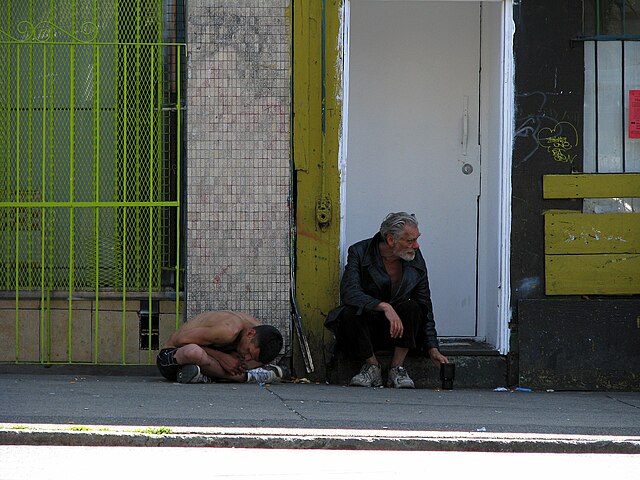
The first issue is that substance abuse does not have a sexy solution. Helping people mired in addiction is a difficult and long process. At the scale that drug addiction exists within Canada and the U.S., any change will have an outsized impact and take time. While tolerance might seem well-intentioned from the comfort of a mansion in Shaughnessy, the omnipresence of homelessness and public drug use within the city seems as good of an antidote as any to this liberal ideal.
Even independent of constituent beliefs, the optics of changing drug policy are difficult to manage for any political party. Those suggesting policy change put themselves at the whim of societal conditions, and should overdoses increase in the short term, they will inevitably pay a high political price. Whoever attempts to change the policy paints a target on their own back, making it a difficult ask of any party, regardless of political affiliation.
The second issue is an internal identity conflict between different factions within the leftist space. On one side are those who believe in the supremacy of the state, the other in the supremacy of social justice. From the perspective of the state-supremacists, forced rehabilitation and treatment is an important part of the solution, and an effective rebuke to the idea that decriminalization incentivizes the wrong behaviour. On the other hand, social justice-supremacists are characterized by their understanding of the drug “problem” as an intersectional issue, with marginalized people historically suppressed by the state at the forefront. In this camp, the focus is generally on harm-reduction and de-stigmatization and shies away from mandated rehabilitation, seeing it as a loss in autonomy akin to the imprisonment common throughout the War on Drugs.
The third issue is the failure of drug programs in the past. With the opioid crisis growing throughout the late 2010s, politicians were looking for easy solutions. As overdose deaths rose, the longstanding focus on incarceration appeared increasingly ineffective, and leaders looked left. Success stories like Portugal, Uruguay and Switzerland all showed the same thing: decriminalization could be an effective remedy. So, when decriminalization efforts were adopted by both British Columbia and Portland in the early 2020s, many activists became optimists. It appears a page was finally being turned, and the War on Drugs would gradually fall away. Unfortunately, that was not the case.
Cut to 2026, where Portland’s reforms have already been reversed and British Columbia does not plan to extend the pilot project past this year. Both projects were thoroughly planted in the social justice camp that took precedence throughout the 2010s. They quickly became infamous as failures when overdoses rose in both cities, open air drug markets flourished, and public drug use rose. These “failure stories” quickly acted to counter the successes of earlier programs in Portugal, Uruguay and Switzerland. Politicians now face an even harder uphill battle toward humanitarian drug reform, whether it has the faults of the programs in Portland and B.C. or not.
Ultimately, the left has failed to capitalize on the momentum they had during the late 2010s and early 2020s for substantive drug reform in North America. Despite these difficulties, drug reform remains both possible and viable. If real change for the better is desired, it remains necessary.



.png)

