
Avid readers of The Phoenix should remember UBC Okanagan’s a cappella club, The Beats. If you have read about them in our previous Opinions and Arts & Culture sections, you would be familiar with the ICCA, that is, the International Collegiate Championship of A Cappella, where The Beats have recently made history.,
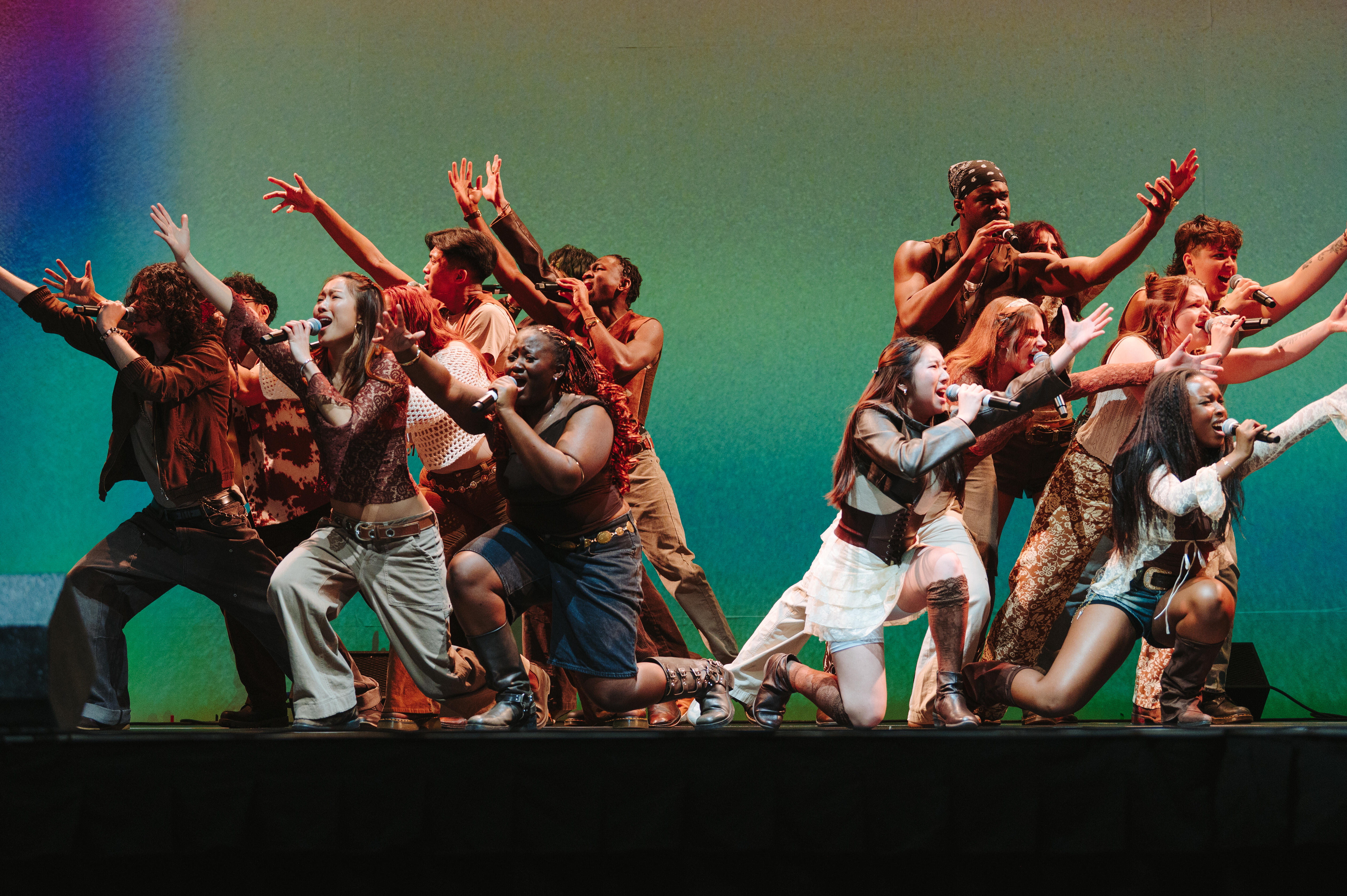
On January 24, 2026, The Beats’ intensive competitive team, The Trill Seekers (TS), placed second at the ICCA West Quarterfinal in Tacoma, Washington, USA. Later this year, they will be representing UBCO and competing at the semifinals alongside the top ten a cappella teams in the West Region.
Founded in 2018, The Trill Seekers has consistently striven to advance in the ICCA, but until this year, they had never progressed beyond the quarterfinals. Michael Adebiyi and Angela Dela Santa, the co-musical directors of TS for the past three years, say that this milestone means “everything.”
“It's validating,” says Adebiyi. “I love music, but I never felt like it was something that I could really put myself into. To now have something that I’ve worked on and led in terms of the production, and to be recognized on a more professional level, means a lot to me.”
When I interviewed The Trill Seekers on February 2, 2026 to discuss their recent achievement, Sydney Curwen, the team’s internal director, shared similar feelings of validation as Adebiyi. A Soprano who has been in the team for four years and internal director for three, Curwen is proud to see people from other competing teams recognise TS’s faces at this year’s ICCA.
Curwen says, “In my first year, a lot of the other teams were just like, ‘oh, it's The Trill Seekers, they're okay,’ or ‘pretty good for this year.’ The three of us (Curwen, Adebiyi, and Dela Santa) have worked incredibly hard to get this team to where we are now.”
Dela Santa nodded and joked about how she tears up every night rewatching the video of them placing second:
“Semis or not, my biggest goal was always to get recognized for the work we've been doing. At semis, I hope we make them think, ‘What’s this little school from Kelowna? They're kind of good.’”
TS has evolved tremendously in the leadup to this milestone. Adebiyi describes the team’s sound as more “modern” now, meaning that it is closer to what you would hear in mainstream music as opposed to classical or gospel styles of a cappella. The co-musical directors have observed that most winning teams at the ICCA lean towards contemporary genres.
From researching past winning performances to making tough decisions about member line-ups each year, the trio of directors have revamped the way they run this team. At the same time, they want to ensure that the team members are enjoying their time in TS.
Overall, Curwen observes that their team dynamic has improved year after year.
“The three of us have worked out a lot of the kinks in leadership. We’ve figured out what works for people and what doesn't. So, we ourselves kind of have a new game plan. I think that because we're sure of ourselves, the team can be sure about what they're doing as well.”
Leading a team of 16 is not easy, and while many schools have abundant resources to coach their a cappella teams, UBCO does not.
This “little school from Kelowna” has a small student population and no music program. No one that walks into The Beats’ audition room is a music major or a professional singer, whereas that could be the case for some of the other competing universities at the ICCA.
“We can’t even book rooms to practice in,” adds Adebiyi. Most times, the club has to try their luck at finding an empty classroom to practice in — if you ever hear “doo-bee-doo-bee-doo” ascending up the scale from a classroom on a random Tuesday evening, chances are you have caught one of the club’s teams warming up for practice.
Considering the lack of resources at UBCO, Adebiyi describes placing at the ICCA as “something that has felt impossible for the school for so long.” He and Dela Santa emphasize, however, that this has been a challenge, but not a hindrance.
They have been able to fill the gaps in resources thanks to many alumni. TS has received help from Brendan and Kayley Bourcier, the club’s co-founders; Francois Vermeulen, a vocal coach and father of an alumnus; and past members of the team like former musical director, Jason van Zyl.
“Their journey is also our journey,” says Dela Santa. She attributes her and Adebiyi’s confidence as leaders to van Zyl, who was a huge source of encouragement for the current co-musical directors to run for their positions in the first place. Over the past three years, van Zyl has stayed in contact, giving them notes and advice on leading the team.
These talented and committed students meet for a minimum of eight hours a week. However, with sectionals (additional practices in their individual voice parts), choreography sessions, and one-on-one training, those eight hours can add up to 12. In addition to interviewing the directors of TS, I also chatted with a few members to understand what that commitment looks like.
Gabriela Chan: What makes being in TS difficult?
Virgil Abou-Mechrek (Tenor, second year in TS): Definitely the time commitment. I think some of the busiest people I know are in this group, and it takes a lot of dedication. We can't be doing other things during practice or we're going to miss something because it’s really, really fast paced.
Julia Otero (Mezzo-Soprano, first year in TS): There’s that and the imposter syndrome. When I received the acceptance email from TS, I thought, ‘Why the heck did they pick me? These people are so amazing and talented.’ In the beginning, I went through a learning curve and the frustration of having to pick things up at such a fast pace, but once I got into the groove of it and jumped that mental hurdle, I felt like something fell into place.
Chan: What makes being in TS easy?
Abou-Mechrek, Jon-Rae Clarke (VP Events, Baritone, second year in TS), and Merck Mendoza (Bass, second year in TS) revelled at the satisfaction of making progress together. Mendoza adds, “Succeeding in this team gives me confidence elsewhere. There's that hope for myself when I see that my hard work has paid off.”
“A lack of existential dread,” he calls it, to which the rest of the team laughed. Though a funny way of putting it, he is not wrong. A lot of joy comes from preparing a performance for an audience, hearing your team improve with each practice, and counting down to showday. It is that anticipation, knowing something good is coming, that encourages one to approach all areas of life with a little more faith and excitement.
It might have been that “lack of existential dread” that motivated Otero in school. Unexpectedly, since she joined TS, her grades skyrocketed. She explains, “For one, I have a creative outlet, but also, developing that dedication, consistency, and prioritization, which are so important in this team, actually helped me with my schoolwork.”
Being in a team like TS requires you to be good at singing, but that is not enough. You must also develop time management and responsibility. These skills serve you outside of a cappella, which is why Otero encourages others to engage in extra-curricular activities. When it is something that you love doing or a community that supports you from start to finish, she believes that you are never too busy.
A like-minded team who spends lots of time together, TS has grown close over the past few years. While the combination of members changes annually, many have been in the group for over a year, so I asked them to share some memories from their time together.
Curwen: I think it was last year when we were sitting in a circle in this exact room, a few weeks ahead of the competition, and talking about what the setlist means to us. People were sharing their personal stories, some of their trauma, and childhood memories. Some of us were crying pretty hard by the end of that.
“Every year, that’s a really big moment where we realize that this is a safe space. Not just that, it is our personal safe space. You can be whoever you want, say whatever you want, do whatever you want, and you know you're not going to be judged for anything.”
That personal safe space is the culmination of people’s kindness in addition to an open environment created by Curwen and the co-musical directors. Although we were talking about memories, Abou-Mechrek answered with a name, Hidechiyo Higa (Vocal Percussion, second year in TS).
“Chiyo brings the energy that we need. He is always willing to shoot someone a message and ask how they’re doing or, ‘oh, do you want to come do this with me?’ It’s so refreshing and a huge reason why the team is the way that it is. I feel like we feed off of his kindness.” To Abou-Mechrek’s point, Mendoza responded, “Can Chiyo get his own page or something?”
Just a few minutes prior to TS placing at this year’s West Quarterfinals, Adebiyi and Dela Santa were prized Best Choreography; before they are able to wrap their heads around that — their first ever award as co-musical directors — the MC announces, “and second place goes to … The Trill Seekers!”
Chan: How do you feel about participating in the ICCA semifinals for the first time in TS’s and The Beats’ history?
Curwen: It’s nice to not be done yet. Usually, at this point of the year, we’re getting ready for The Beats’ spring show but there is not much else to do. This year, it's nice to know that there's more to work towards.
Now that The Trill Seekers are semisbound, Dela Santa’s Google Calendar is all red — TS’s team color. They are honing in 10–12 hours of practice per week, polishing up their choreography, and most importantly, raising funds to travel to the competition.
The 2026 ICCA West Semifinal is set to take place on March 21, 2026, in Redwood City, California, which is much farther from Kelowna than Tacoma, Washington. Since this is a first for The Beats, the club’s funds are far from enough to cover the travel costs and “we pretty much have to fully fund ourselves,” states Curwen.
The Trill Seekers has set up a GoFundMe and are currently accepting donations with the goal of raising $15,000 CAD. In addition, they have a few fundraising events lined up for the next two months including a merchandise sale and performance at the Community Market on March 10, 2026.
To support TS and help them continue their story, scan the QR code below, spread the news with friends and family, and follow them on Instagram (@thetrillseekers_) to stay updated on their journey. One way or another, Dela Santa is determined that they are going to get there. “We’ll start walking tomorrow,” says Curwen, but let’s not make them walk to California.