
In 2019, the National Assembly of Quebec passed a highly contentious law titled Bill 21, which prohibits public sector workers from wearing religious symbols while on the job. The rule applies to anyone deemed to be in a position of authority, most notably judges, government lawyers, teachers, and police officers. The law was passed through invoking the notwithstanding clause, or section 33 of the Canadian Charter of Rights and Freedoms, which effectively allowed the National Assembly to override the section of the Charter that protects religious freedom in Canada.
The notwithstanding clause was introduced to the Charter in 1982 as a way for provinces to resist federal judicial overreach in their interpretation of its contents, and was backed in large part by provincial leaders during Charter negotiations (save Ontario and New Brunswick). Many premiers were apprehensive that the Charter would put too much power into the hands of the unelected courts, and thus the Charter likely would not exist without the clause. In spite of this compromise, however, Quebec was notably the only province that did not consent to any of the changes to the Constitution in 1982 and still has not agreed to the changes 44 years later.
Section 33 is unique across countries with constitutional democracies. Conceived of and proposed by former Alberta premier Peter Lougheed, it allows provincial legislatures to override certain rights and freedoms for up to five years at a time, at which point the legislation requires review once again before it can be reimplemented. The total number of successful uses is up for debate among scholars, but some sources claim it has been invoked a total of 27 times since its inception.
After Saskatchewan invoked the clause in 2018 for the first time in 13 years, it has seen a boost in popularity in provincial legislation from coast to coast. The most recent uses of the notwithstanding clause came in October and December 2025, when Alberta passed the “Back to School Act”, ending a three week long teacher’s strike and prohibiting further strikes until 2028; and Bill 9, which polices chosen names for transgender youth in schools, prevents transgender girls from playing on sports teams, and prohibits doctors from prescribing hormone therapy for children under 16.
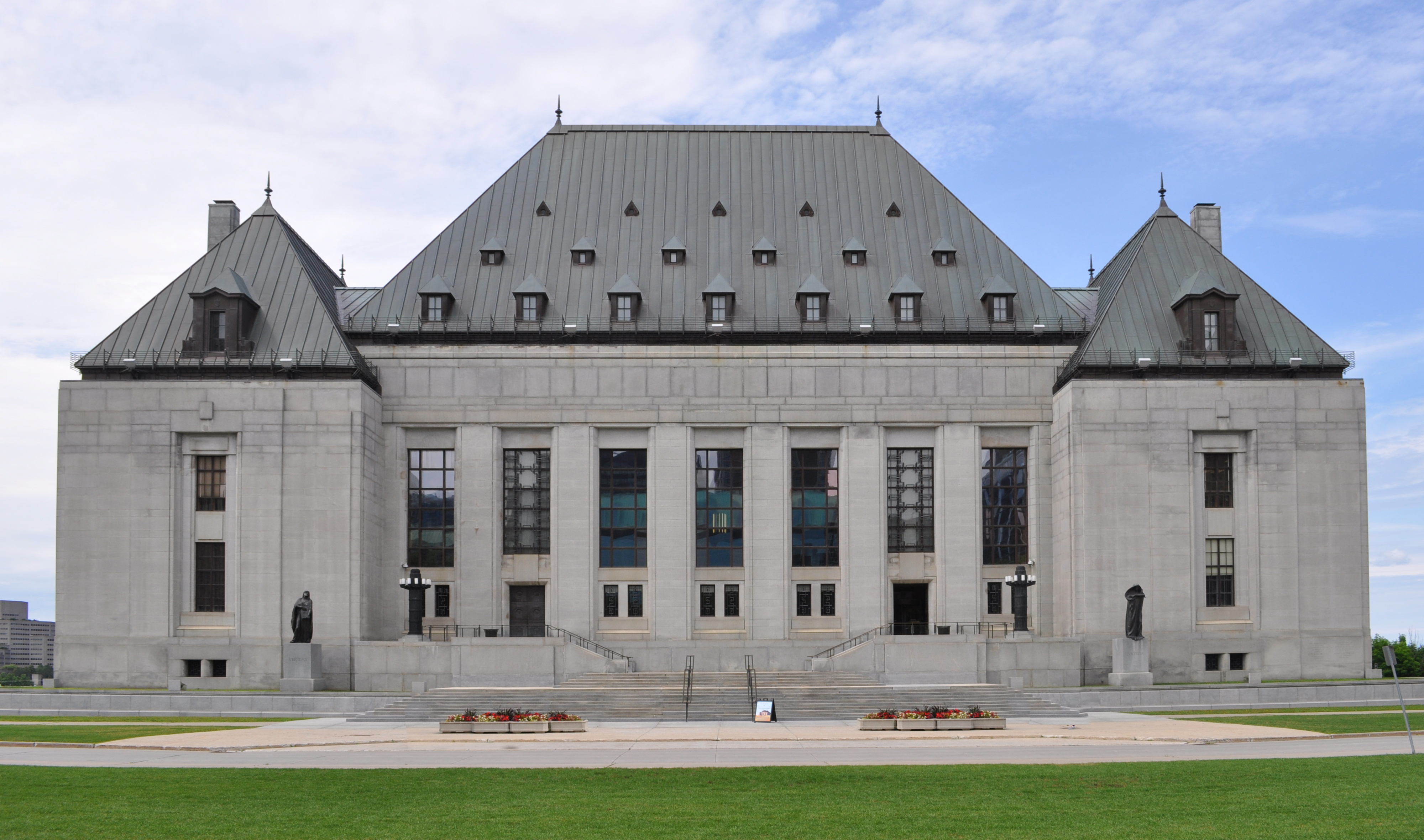
Monday, March 23 was day one of a four-day appeals hearing regarding Bill 21 at the Supreme Court of Canada. The Fédération autonome de l’enseignement, English Montréal School Board, the World Sikh Organization of Canada, and the Lord Reading Law Society, as well as a handful of individuals, are all appellants in the case. Seven of nine justices will hear their arguments, but judgement renderings may take a few months to a year to be finalized and released.
Bill 21, or An Act respecting the laicity of the State, restricts public sector workers from wearing “clothing, a symbol, jewellery, an adornment, an accessory, or headwear” that is reasonably representative of a religious affiliation. This means that hijabs, turbans, visible crucifixes, and yarmulkes are all disallowed under the law. Employees affected are required to remove their religious items while working or face consequences, including termination.
Some argue that the law unfairly targets Muslim women who work as teachers in Quebec, and in a 2020 court challenge, plaintiffs presented evidence that the law prevented some from being promoted or getting a job at all. Those who were employed prior to the law coming into force are exempt from the ban, but if an affected employee seeks to change positions as of 2025, they will be required to secularize their on-the-job identity first.
Bill 21 has been challenged multiple times since it was rolled out and more than 50 interveners have been involved in the case so far, yet the Quebec Court of Appeal upheld the law both in 2021 and 2024. These decisions have motivated appellants to bring the case to the Supreme Court of Canada.
The hearing happening today is not a matter of whether or not the contents of Bill 21 are legal. The notwithstanding clause allows provincial governments to override fundamental freedoms such as those of religion, expression, and assembly; legal rights such as the right to life, liberty, and security; and equality rights regarding gender, race, and age. There are some parts of the Charter that are protected no matter what, however: they include voting rights, mobility rights, and language rights.
Arguments in favour of the notwithstanding clause claim that the clause puts decisions regarding provincial issues into the hands of democratically elected legislatures, not appointed federal judges. In doing this, provinces have more control over their own jurisdictions and the unelected judiciary has less power to control legislation passed within provincial borders.
Those against the clause contest that it unfairly allows lawmakers to ignore fundamental rights and freedoms without repercussions. It is seen as a total override of the Charter, voiding its influence and importance to protecting Canadians. Arguments have been made that section 33 was never meant to be used as a one-size solution to human rights issues in Canada, but its intended purpose was to protect provincial laws when there was a real possibility that the Supreme Court would exercise its judicial powers to overturn those laws as they deem necessary.
The groups challenging Bill 21 in the Supreme Court argue that section 33 was, in this case, utilized improperly. They hold that it was never meant to be used as a precautionary measure to prevent the courts from striking down a law, which it was in this instance. Instead, they say, section 33 should only be used in response to a court voiding a piece of legislation only after it has been passed first in a provincial legislature, in accordance with traditional uses. This way, courts have the chance to examine which Charter rights are actually being violated before the province takes action.
As the notwithstanding clause has grown more popular in recent years, this method of inserting the clause into the first text of passed bills is becoming commonplace. Alberta and Saskatchewan used the clause in the same way in 2025 and 2023 to pass laws that affect the rights of transgender youth, limiting gender affirming care and banning students under 16 from using preferred names and pronouns at school without parental permission, among other restrictions. Baking section 33 directly into the text of a piece of legislation is strategic for these provinces because it allows them to implement the law immediately, rather than deal with a long and arduous court case.
On the side of the defense, lawyers representing Quebec argue that there is nothing in the Charter that states that the notwithstanding clause cannot be enacted ahead of time. Lower courts that have heard the case agree with this interpretation, allowing the law to remain.

Why was Bill 21 implemented in the first place? Quebec has a unique history with secularism, or laïcité, and religion in the public sphere. Prior to the Quiet Revolution of the 1960s, the Catholic Church held a very powerful role in Québécois society, and was tasked with managing the education and healthcare systems in the province. Through a decade of social and political change, however, the provincial government took control of the systems from the financially strained Church, and in doing so, moved towards a more progressive and secular identity.
Laïcité is also integral to French society in Europe. In 1905, France passed a law officially separating the Church from state institutions. The law represents a core value of modern French politics, and has only been built upon over the years. France has passed laws since then that are quite similar in substance to Bill 21 in Quebec: for example, in 2004 a law was passed prohibiting face coverings in public, and in 2016 nativity scene displays were banned from town halls.
As for the consequences this ruling will have, whatever the results may be, the notwithstanding clause is stepping into the sociopolitical and legal limelight across Canada alongside questions of who should have the power (or if the power should even exist) to override the Charter. On March 23, Coalition Inclusion Quebec lawyer Molly Krishtalka made the argument that the notwithstanding clause is not to be used for laws with the sole purpose of infringing Charter rights. “That is something that cannot be upheld,” she argued before the Supreme Court justices.
Every province in Canada except for British Columbia has stated that the courts should not be allowed to comment on laws protected by section 33. On March 25, Ontario Attorney General Doug Downey stated that “...courts should not provide opinions on whether the law would have been constitutional if that invocation had not been made.”
UBC Okanagan assistant professor of political science and Director of the UBC Research Group for Constitutional Law, Geoffrey Sigalet, wrote in a March 2026 article for Civitas Outlook that the spectacle around section 33 today is a “constitutional crisis.” This chaos comes in part from the fact that the clause was written to allow provinces to bypass the prying eyes of judicial review, and in part from the fact that Mark Carney’s federal government has chosen to interpret the clause as being non-renewable if it “irreparably impair[s]” Charter rights.
Now that the hearing has ended, it is only a matter of time before the Supreme Court releases its final judgement on the case. If they deem this use of the notwithstanding clause unconstitutional, it will have implications for other recent uses in Alberta and Saskatchewan. If they rule the other way, it will change how provinces approach the use of the notwithstanding clause in future controversial decisions about Charter rights and who can alter them.


.png)

