
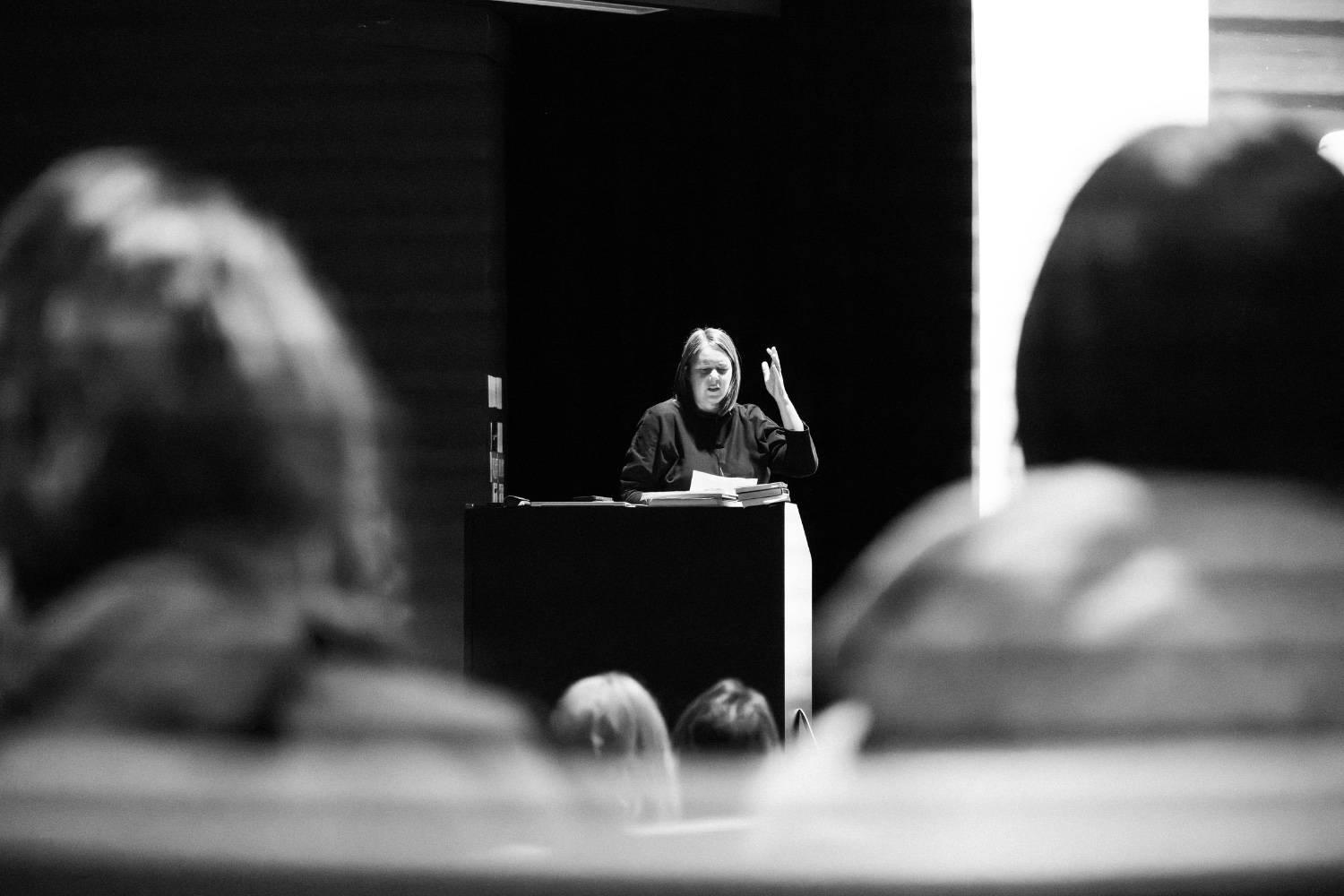
We all know what it is like to be a student at university. We share stories about exam seasons, last-minute projects, part-time jobs, and the challenges of balancing our lives around assignments and classes. But we rarely discuss the other half of that exchange. What is it like to be the person standing at the front of the room? What does it mean to build a career around teaching, mentoring, and basically guiding hundreds of students every year at a university?
To answer this question, I spoke with two professors whose careers have taken very different paths into academia – Professor Jan Cioe, who teaches courses in the discipline of psychology, and Professor David Geary, who teaches anthropology courses at UBC Okanagan. Their stories show a side of university life that students seldom get to see.
All professors have a first moment that sets them on their path. For Jan Cioe, it began with admiration for the professors he had met as a young student.
“I had some really good role models who were teachers,” he said.
Cioe remembers their presence, discipline, and their command over and love for the subject matter they teach. He explains that he had always wanted to teach, even before he knew what a career in academia would look like. As an undergraduate, he worked in the classroom as a teaching assistant, further strengthening his interest in a career in post-secondary education. Cioe’s work later brought him to Cambridge University for a Master’s degree in criminology, and eventually to UBC Okanagan via Okanagan College in 1990, long before the campus officially became part of the university in 2005. Over the years, he has taught Introduction to Psychology, Forensic Psychology, Human Sexuality, and Statistics.
David Geary’s trajectory began at Simon Fraser University, where an introductory anthropology course changed the way he views the world. During his undergrad, he had inspiring mentors who made him fall in love with the entire field of anthropology.
“I found a discipline that sparked curiosity, wonder, and the exploration of different ways of being and knowing in the world.”
After several years spent exploring different fields and working in tradeshow and exhibition management, he realised that something was missing. So, he returned to pursue graduate work, followed by research and a Ph.D. that focused on tourism, pilgrimism, and heritage. His fieldwork took him to India for the first time, which became a defining moment in his career. By 2013, he joined UBC Okanagan and began teaching courses on cultural anthropology, religion, heritage, and the politics of memory.
Despite their different disciplines and experiences, both professors describe teaching as something that comes naturally to them. In both their lives, the support of wonderful mentors paved the way for what was to become a great career in teaching.
In response to questions about why he teaches, Geary explains that for him, the motivation has always been about inspiring others. His professors had once opened up the world for him, and he wants to do the same for his students. He sees education as a transformative tool and believes that the most rewarding aspect of his job is building meaningful relationships with students and supporting their goals beyond the classroom. He has remained in touch with former students, and he considers those ongoing connections to be one of the greatest privileges of his career.
“Teaching is a way to inspire others,” says Geary.
Cioe said the most rewarding thing about his work is engaging with students. He adds that teaching is not simply about lecturing but also about forming connections. For him, the most enjoyable work takes place during Directed Studies and Honours projects. He enjoys reading drafts, providing extensive feedback, and helping students turn their ideas into coherent, structured arguments. One student, he shares, went through seven separate drafts before the final version of their manuscript was ready. That process was demanding, but in ways that made him value the process deeply.
Many students think professors have easy schedules and free time. After all, it is just teaching a course. Cioe immediately challenges that — it is not as easy as it looks. He teaches three courses a year, one each term. He spends an average of fifty-five hours a week on course preparation, grading, meetings, administrative duties, and mentoring honours and directed studies students, among other tasks. He also serves as a senior academic advisor, which means he regularly meets with students who need guidance about their programs or their future plans. As rewarding as the job is, it looks lighter from the outside than it feels from the inside.
Geary expands on this point by noting that students often underestimate how much professors value their interactions with students. Since the pandemic, those interactions have become harder to build. He explains that:
“Teaching requires vulnerability. Professors have their own doubts and concerns, even if they do not express them openly.”
He believes that students would be surprised to learn how much their engagement matters to instructors. Geary wants students to feel seen, not as assignments or grades, but as individuals with their own perspectives and experiences.
We all know that the pandemic significantly changed the scope of education and learning in many ways. The university experience feels different from what it was a decade ago.
Cioe has observed a clear shift in how students approach academic work. He believes that many students struggle with foundational study habits. He said that some students attend university because it is expected of them, not because they are prepared for the work.
“The message ‘You can be anything’ can be misleading. It may cause students to equate academic difficulty with personal failure rather than recognising that people have different strengths and skill sets.”
He also highlights how the pandemic intensified many of these challenges, creating major gaps in motivation, engagement, and just basic study strategies.
Geary emphasizes his own concerns with the pandemic in a different way. He explains that the pandemic created new barriers between students and professors, disrupting the natural human relationship in the classroom. Students became more hesitant to speak, more anxious to participate, and more reluctant to form connections. He sees this as a challenge, but not a defeat. Geary believes that teaching must evolve with the times, and he looks for innovative approaches to encourage attention and curiosity. Now, treats each class as an experiment, adjusting his methods to meet students where they are.
Teaching is an art as much as it is a profession, and both professors have their own methods of building engagement and connecting with students on a personal level.
Cioe uses a range of techniques, especially in his Human Sexuality course. He asks students to break into groups, discuss prompts, and share insights. He walks among them, listens, and sees what they can come up with, and carries around a bag of candy to reward participation and enthusiasm. In one instance, when a student refused candy, he began offering twenty-five cents instead, which eventually turned into a running joke in the class. Another technique he uses to motivate students comes after exams, where some of the best essays and answers get a chance to be read out loud to the class. On top of the class having an opportunity to learn from strong work, it gives the student reading their answer a confidence boost.
Geary takes a different but equally thoughtful approach. He tries to connect at a human level and believes that students respond best when they feel seen and heard, utilizing small group discussions, flexible assignment formats, and creative project options in his syllabi to help students take ownership of their learning. He encourages open-ended inquiry, especially in anthropology, where interpretation, culture, and imagination are central to the discipline. He says that every class teaches him something new about his students and about himself.
Both professors emphasise that teaching is not a one-directional interaction. Students also shape professors.
Cioe reflected on his experience teaching Human Sexuality since 1980. He has witnessed dramatic changes in how younger generations understand gender, sexuality, and identity. He explains that once-neutral language has taken on new meaning for students today, and he appreciates these shifts because they push him to remain informed and respectful. Cioe tells students that they have a responsibility to challenge him when he makes mistakes or uses outdated terminology. He says he values those conversations because they strengthen the learning environment for everyone.
Geary said that students give him hope. He admires the optimism and curiosity that students bring into the classroom, even in times of such global uncertainty. He believes that anthropology not only gives students the tools to understand systems of power and the impacts of colonialism, but also to imagine alternatives to the world they inherit. Students teach him, he says, about resilience, creativity, and the importance of staying open to transformation.
When asked about any advice they have to offer, here is what they shared.
Cioe urges students to make direct contact with their professors and teaching assistants. He believes that personal relationships matter. Attending office hours changed his own academic life, and he hopes students will use these opportunities more often.
“Ask questions, seek help, and treat professors as approachable mentors rather than distant figures,” encourages Cioe.
Geary wants students to hold onto wonder. He believes that curiosity is vital to navigating university as well as the world beyond. Education is not just about knowledge, but about forming meaningful relationships and becoming conscientious to the world’s complexity.
“I want students to remain open to new ideas, to question structures, and to imagine better futures,” Geary shares.
Teaching at a university is a commitment to students, to learning, and to the ever-changing sphere of higher education. Professors carry the weight of academic preparation, mentorship, administration, and emotional support. They work within a changing landscape of attention, technology, and post-pandemic recovery. Yet both Cioe and Geary find meaning in their work because of the students who walk into their classrooms.
The university experience is shaped by both sides of the lecture hall. Professors transform students just as students transform professors. This dynamic is at the heart of what it means to teach and learn at UBC Okanagan.


.png)

