
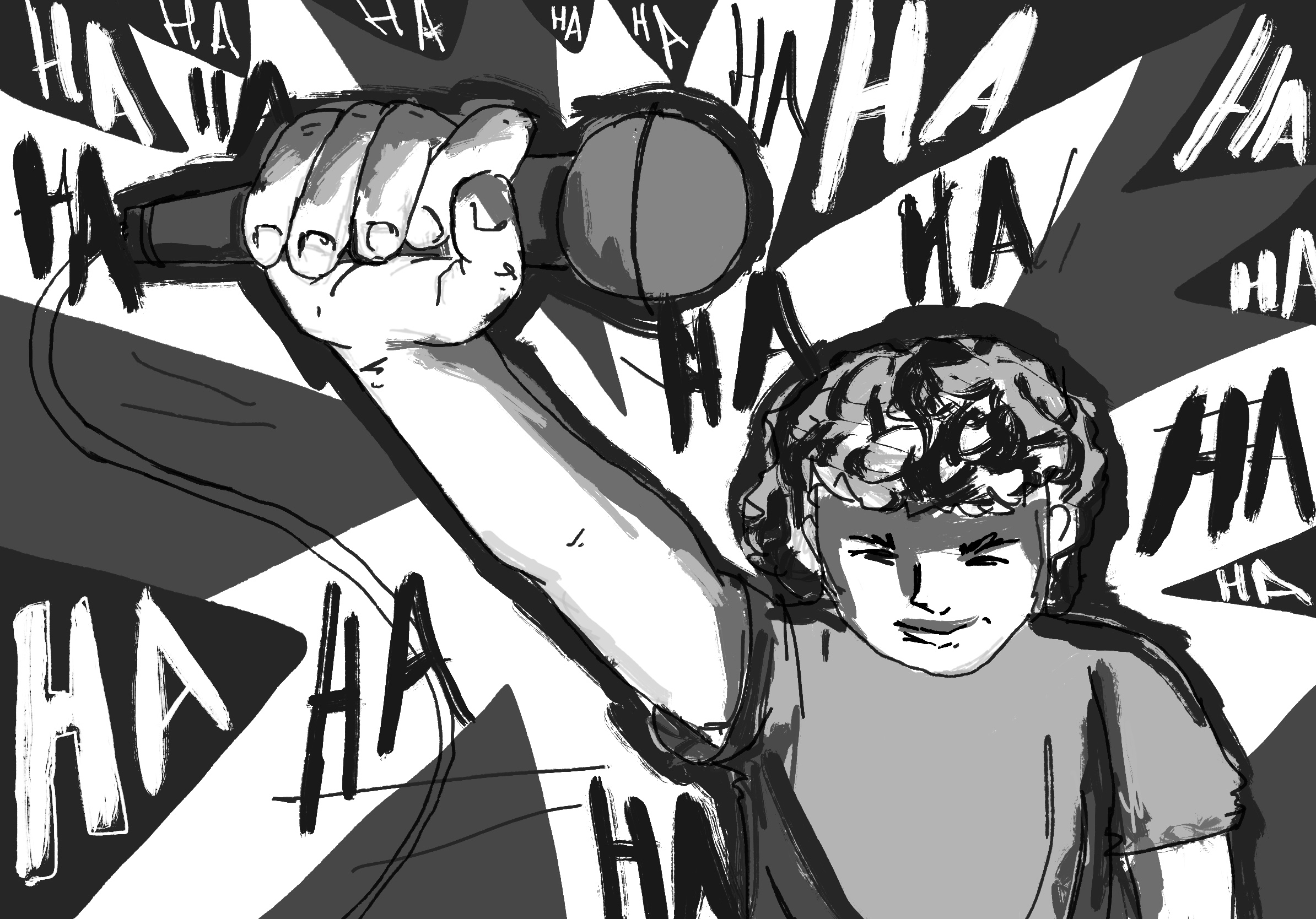
You know that awkward moment when someone says something completely inappropriate, and you really want to laugh, but you are not sure if you should? That hesitation is where dark humor lies, right at the boundary between what is funny and what feels wrong.
Dark humor, black comedy, gallows humor, whatever you call it, is everywhere. It is one of the most popular forms of humor across social media, stand-up comedy, films, and television.
Dark humor explores serious, depressing, or taboo subjects under the guise of jokes to create an unusual and even thought-provoking contrast. With it, no topic is truly off-limits. The surprise factor and absurdity are what catches one off guard and triggers laughter.
Part of what makes dark humor work so well is its ability to turn discomfort into something less intimidating. Psychologists often describe humor as a “benign violation”, or something that breaks a social rule but still feels safe enough to laugh at. But, most popularly, it functions as a coping mechanism of sorts.
By joking about things that seem scary or painful, people can disconnect from what bothers them. Issues that might otherwise feel overwhelming become something we can momentarily control or at least understand differently. So dark humor does not just entertain, it helps people process and view situations from new lenses.
Of course, not everybody finds the same content funny. Dark humor relies a lot on context, like who is telling the joke, what the butt of the joke is, and who is listening. A joke that feels clever to some can be offensive or insensitive to others. That is why dark humor can feel risky and incite controversy so easily. It relies on a subtle understanding between the speaker and the audience.
Stand-up comedy has become the most obvious playground for dark humor. What began in small clubs and live performances has now expanded into global stages through streaming platforms, social media clips, and sold-out stadiums. Today, comedians are equal parts entertainers and commentators, using humor to address crucial topics and social issues tactfully and creatively. It quickly went from an emerging art form to something more substantial and grounded. Popular comedians who have made a name for themselves using dark comedy include Doug Stanhope, Anthony Jeselnik, Samay Raina, Ricky Gervais, and Russell Peters.
But dark humor in stand-up is highly controversial because it pushes social boundaries in such an unconventional way. For instance, in India, comedians have faced legal action, show cancellations, and public backlash for jokes related to religion, gender, or politics. In North America, comedians face the consequence of “cancel culture”, where they are criticized or deplatformed for jokes considered insensitive.
The fact that humor is deeply subjective makes this more complicated. The same joke can feel honest and carry good intentions for one audience, or harmful and derogatory to another. Comics are left debating where the line is, and whether that line should exist in the first place.
Comedians like Anthony Jeselnik are known for pushing boundaries with deliberately provocative jokes to make even the darkest topics land as humor. Others, like Hasan Minhaj, bring in personal stories, mixing dark humor with real talk about identity, racism, and politics. It shows that dark humor is not all the same; it just depends on how it is used.
On the flip side, recently, dark humor has begun to feel less like critique and more like competition. Who can say the most offensive thing and still get a laugh? In the process, the focus moves away from questioning systems and towards making vulnerable communities the punchline. When serious topics are constantly turned into jokes, they can lose the weight they carry in real life, making it easier to laugh and harder to take them seriously.
Dark humor is not inherently harmful. In comedy, there is a concept of “punching up” versus “punching down”, wherein jokes that challenge those in power tend to feel more justified and sharper, while comedy at the expense of less advantaged groups, in comparison to the writer of the joke itself, feels uncomfortable.
Dark humor is more than being edgy or stirring the pot. It exists in that strange space between what is funny and what is painful. As audiences become more aware of social issues and more vocal about what they find acceptable, the boundaries of humor keep changing. While dark humor may never fully escape controversy, that tension is part of what keeps it relevant.


.png)

