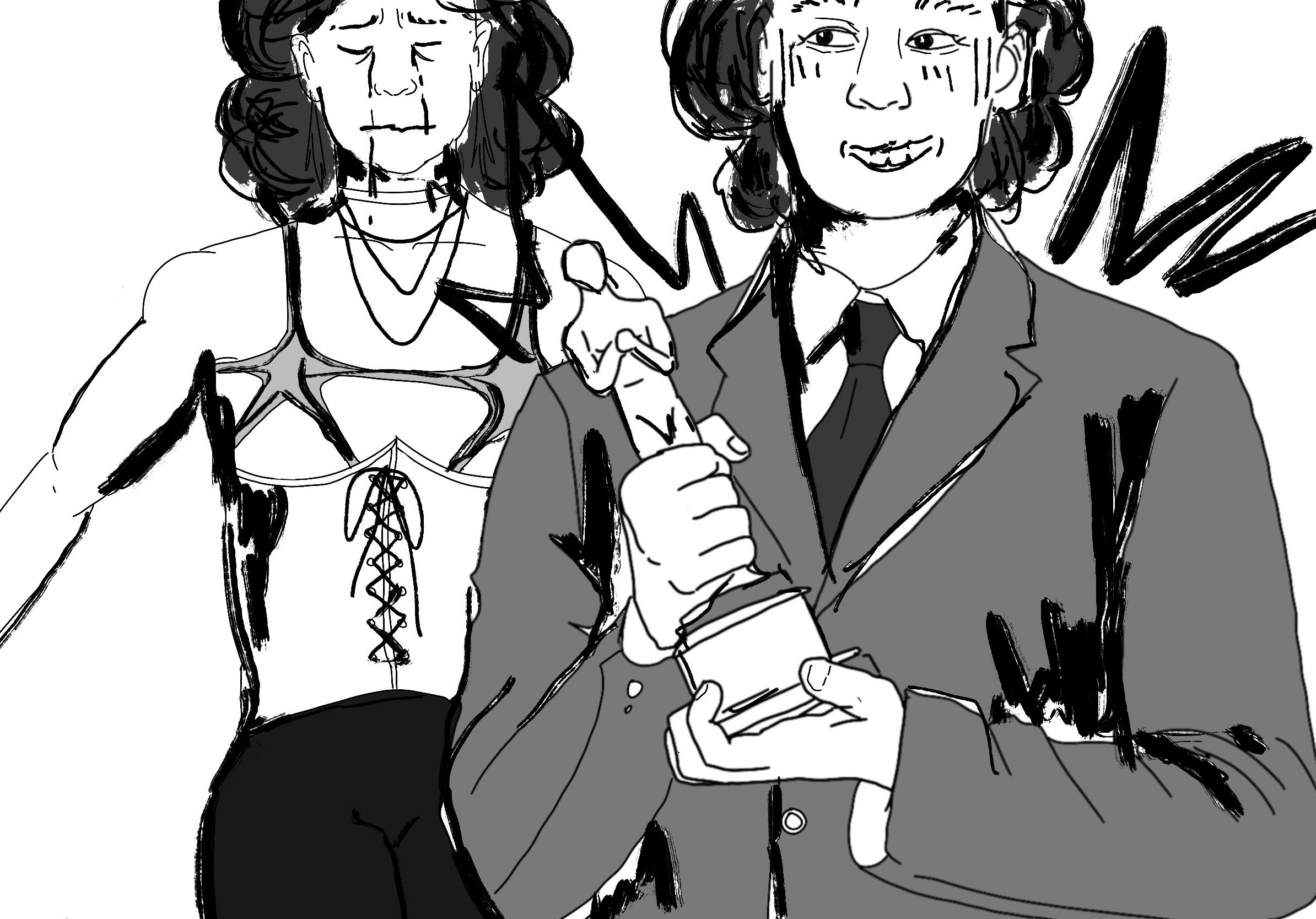
Modern discourse surrounding queer representation in media looks more at the specifics of what makes good representations as opposed to harmful ones. One of the conversations stemming from this is whether or not cishet (cisgender and heterosexual) actors should play queer characters, which is a question that can not necessarily be answered with a yes or no.
Films like Blue is the Warmest Color and Brokeback Mountain feature gay or lesbian protagonists played by straight actors. Both of these films received massive critical acclaim and they continue to be some of the most recognizable queer films today. Both of these pieces of media are important parts of queer history and bring up discussions of queer issues in mainstream cishet spaces.
However, Brokeback Mountain is the story of two stereotypically attractive hypermasculine white men occasionally beating the snot out of each other that ends in a gut-wrenching tragedy. Blue is the Warmest Color ends with one of the two stereotypically attractive white female leads leaving the other for a man. It is hard to deny the historical importance of these pieces of media, but it is also important to consider the impressions they leave on the queer people who witness them. The queer experience can be full of prejudice and hate, but those experiences are not all there are for queer people.
The tragedy in many of the final moments of queer films comes from both a long history of censorship and a need to stir empathy in the hearts of misguided cishet people. Films, for a long time, were not restricted by censorship laws. In the West (circa late 1920s), churches began to stir a moral panic in the public about films containing sacrilegious content, which led to the creation of several production codes. The most famous code was the ‘Hays Code,’ which was later enforced by American governments and forbade ‘obscene’ things such as interracial couples, dissension towards the Catholic church, homosexuality, and couples kissing without having at least one foot on the floor (the cliché of the girl popping her foot up as she kisses a love interest is a cheeky nod to this). The code was later repealed but it took a while before queer people re-entered mainstream cinema.
When they did, many films gained attention for highlighting tragedies, often giving bigoted cishet people empathy for queer people of the time. I have personally seen cases where homophobic and transphobic people weep at scenes of queer pain or even just coming out scenes simply because they are so well-acted. These progressions of opinion help move forward queer rights movements, but can also affect the ways queer people view themselves.
Being trans puts you in a precarious spot in society in general, but certainly it is no help to constantly see depictions of people like you whose lives end in tragedy. The film Boys Don’t Cry, based on the real life story of Brandon Teena, received instant critical acclaim upon release for the performance of Hilary Swank. While the film is important, it is also horrific and a transgender viewer without any support may believe that these tragedies are all that their future holds.
While cishet actors receive numerous awards for their portrayals of real queer people, queer people remain marginalized. The experience of being a marginalized person can be researched, but a cishet actor and film crew will never actually experience life as a queer person.
Looking at the more contemporary example of a little show called Heated Rivalry, we can see how the representation of queer people has changed.
Heated Rivalry is by no means perfect representation. Many have raised questions about the excessive portrayal of sex, the emphasis on masculinity, the use of only stereotypically attractive actors, and the sidelining of female characters in the show. But compared to a film like Brokeback Mountain, Heated Rivalry shows remarkable tenderness, care, and a conclusion containing a sweet admission of love and a coming out scene that does not end in total tragedy.
Questions about the two lead actors’ sexualities have surfaced frequently in online discussion. Fuelled by the complex history of the representation of queer people, many press the actors to share their identities. However, these questions quickly become invasive and pose a dangerous ultimatum to two young actors: ‘come out to us or face serious backlash’. Representation is complicated, but real people should never be forced to come out to prove their legitimacy as queer people.
Again, there is no answer to the question of whether or not cishet actors should play queer characters. There are experiences queer people understand that no amount of research will allow cishet people to know, but each piece of media is different. Any representation of queer, and especially trans people, remains important to furthering societal opinions, but media is only one piece of the puzzle. The biggest hope I have for queer representation is that it can help a queer person see that there are things beyond hurt and, most importantly, that it can help everyone to see that the rights and social equality of queer people are worth fighting for.