
Foreign affairs rarely holds much influence over the politics of any country; it is certainly the more compelling topic, as it often pits one country against another as they both try to find the best possible deal out of a situation. Nevertheless, most politics inevitably find themselves centered around more boring topics: inflation, housing, and so on tend to be more pressing and relevant in everyday people's lives, and any attention towards foreign affairs has historically been a rarity.
Evidently, for Canada in the past two years, that has not been the case. Between Trump's myriad claims of making Canada into America's 51st state, or in America's recent escapades surrounding Venezuela and Greenland, foreign affairs have proven an imminently relevant topic for many Canadians.
Given that instability, it would seem that Prime Minister Mark Carney is doing what any banker does best: diversifying his interests. Whereas Canada has had a uniquely close relationship with America for most of both countries' histories, including an on-again off-again exemption from the tariffs which Trump has otherwise plastered abroad, it would seem that Carney has taken the opportunity to make a generationally impactful shift away from America.
First, Carney met with President Xi Jinping of the People's Republic of China, renegotiating Canada's trade relationship with China, and broadly attempting to build goodwill between Canada and China in doing so.
The deal is as follows: Canada and China have various tariffs against one another, to encourage their businesses to buy locally rather than from abroad. Therefore, in order to improve their shared relationship, both sides have agreed to cut certain tariffs — a decision which has had immediate political ramifications. Canada agreed to reduce their tariffs on Chinese electric vehicles (EVs) from 100% to 9.6%, which had been in place beforehand to promote EV production in Ontario. As a result, businesses will be more likely to buy those products from China, which are of a comparable quality but are now considerably cheaper. In exchange, China agreed to cut its tariffs by similar amounts on Canadian agricultural goods, like canola seed, seafood, beef, and more — something that massively benefits the Maritimes and prairie provinces like Saskatchewan and Alberta.
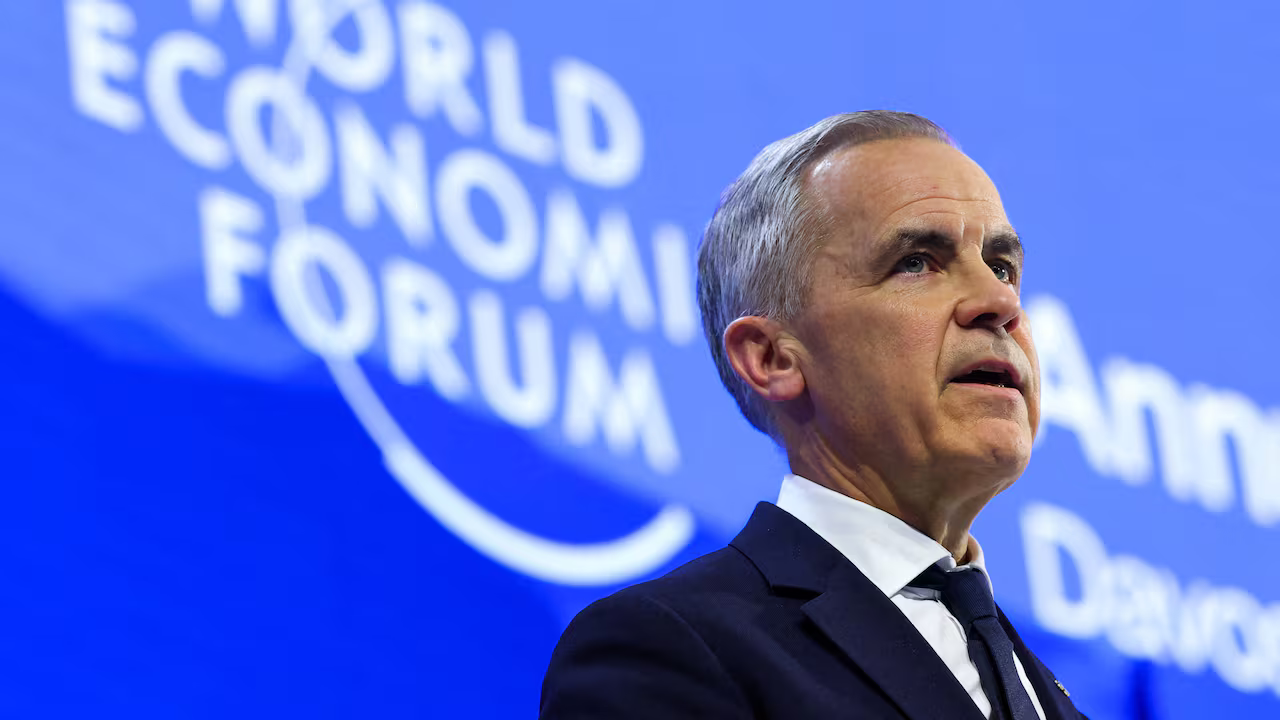
The response to this development has been stark: Saskatchewan’s Premier Scott Moe has praised Carney's actions, while Ontario’s Premier Doug Ford has harshly criticized the deal. Nevertheless, these material changes pale in comparison to the attention that the recent rhetoric that the prime minister employed at Davos has found.
Speaking before multiple world leaders, Carney's speech has internationally been recognized as the death knell of the post-Cold War liberal international order. To briefly paraphrase, Carney stated that the international system in which countries agreed to work with one another through international organizations like the United Nations or World Health Organization was always a lie which only served to benefit those who were able to use those systems to their fullest extent, while it often failed to serve those nations which did not or could not use those systems the same way.
Carney's claim here isn't necessarily wrong: any number of examples come to mind wherein international organizations like the United Nations or North Atlantic Tready Organization take a more active role in international crises which threaten wealthier nations, as was the case with the collapse of Yugoslavia through the 1990s, while those same organizations ignore similar crises peripheral to wealthier states, such as the Rwandan Genocide or the ongoing war in Sudan today. Nevertheless, while his diagnosis of current affairs is agreed upon by many, his prescribed solution is what has generated considerable controversy, as he and other world leaders who spoke at Davos motioned towards closer relationships with China.
It is likely that those nations which are choosing to draw closer to China while keeping the door open to the United States are cognizant of the role of the "Non-Aligned Movement" in the Cold War. That formal, loose alliance of countries declared their intent to stay out of any conflicts between America and the Soviet Union, instead choosing to lure in the financial aid of both East and Western powers, keeping itself in a state of neutrality. Following that line of thinking, it would seem that Carney's foreign policy is not intent on making Canada a close ally of China, but a friend to both America and China at the same time. Whether it's a strategy that works, however, remains to be seen.

.png)

