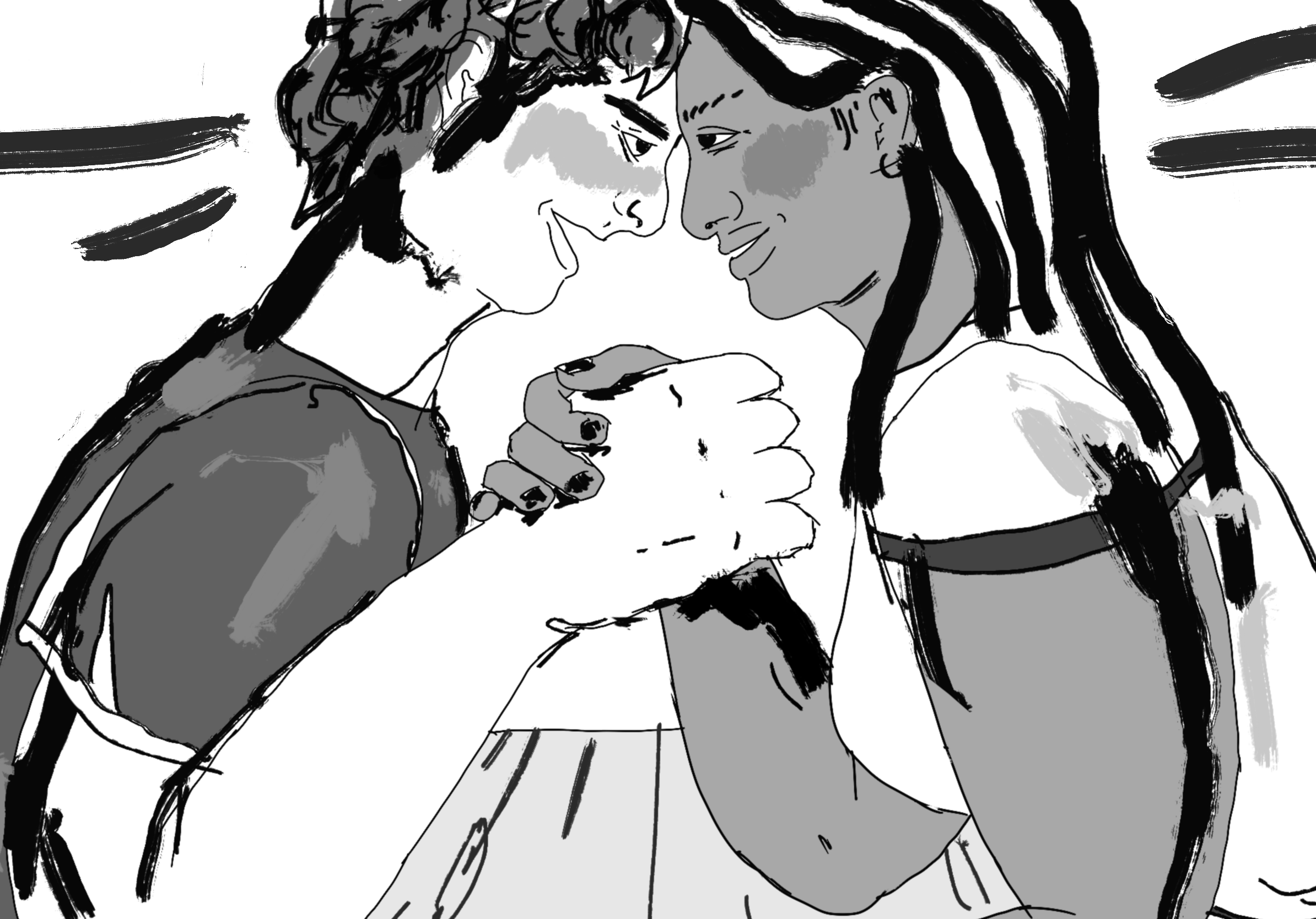
The most convincing love story lies not in grand gestures and tropes, but in conversations. The way two characters talk to each other, the words, the rhythm, the beats; that is what makes up such an endearing aspect of romance: banter. That is where the chemistry resides — be it in books, movies, TV, or real life.
At its core, banter is playful, teasing, and quick-witted conversation. It is what has us giggling like children or smirking like villains as we see it unfold. It is magnetic.
When written well, banter creates a slow-burning tension, reveals personality without a long backstory, and slips subtext into the simplest lines. Most importantly, it makes characters feel like real people. When you have that, the romance stops feeling like a plot point and starts feeling like something you are watching happen in real time.
Jesse and Celine in Before Sunrise (1995), Harry and Sally in When Harry Met Sally (1989), Aisha and Sid in Wake Up Sid (2009) — it is the same kind of magic every time. Why did Season Two of Bridgerton connect with so many people? Everyone was hooked to their screens watching Anthony and Kate face off — the underlying tension, crackling dialogues, soft music, all creating the delicious back-and-forth that is still discussed today. But why does banter work so well? Banter is really just compatibility in motion — the timing, confidence, inside jokes, and emotional safety, all wrapped into a couple lines. After soaking up so many stories, both on paper and screen, I started noticing certain ingredients that made the exchange so ridiculously enjoyable:
- Timing: the reply comes fast, but not desperate
- Specificity: not cookie-cutter flirting, but something oddly precise or observational
- Callbacks: remembering what the other person said three lines ago and weaponizing it in a fun, teasing manner
- Escalation (my favorite): each line raises the stakes, even if it is just playful competition about who is winning
A good back-and-forth can feel intimate, like you are getting a subtle peek behind the curtain. It is not only about the jokes, but also about recognizing if there is a connection, if you both are able to get each other’s references, rhythms, thoughts, and humor.
On page, banter works because it is dialogue with subtext. The characters are not only saying what they mean, but they are circling the thing they will not admit out loud. Writers use that anticipation and dial it up more with tiny tools: interruptions, half-finished sentences, described body language, or lines that sound conversational but carry weight. As a reader, you find your eyes starting to move faster, skimming those short lines like you are watching a rally in badminton, tracking the back-and-forth as it speeds up.
However, creating banter on-screen requires a slightly different three-part strategy of its own: non-diegetic music, pacing, and of course, the performance itself. It hits even harder because the dialogue is not working alone. Music does a lot of heavy lifting because the score can turn a line from silly to romantic in half a second or signal how one person in the equation is receiving it. Then there is pacing: quick cuts and tight reaction shots capture nervous, twinkling eyes and emerging smiles.
Unlike books, films, and TV, let us hear the texture of the banter, pulling us into what the banter is supposed to feel like. Sometimes, the real spark is in what they do, not say, and the camera knows exactly where to look, catching every bit of it.
Great banter does more than just fill the space between characters; it gives each person a distinct voice. One has that bone-dry wit, the other, pure drama. Someone hides behind jokes, and the other pokes holes in the act. Since it is all written, every line earns its place. That is where the “spark” comes from, the sense that the conversation is alive and you are right there inside it. When banter is so convincing that it feels effortless, it often makes you feel like you are eavesdropping on a conversation you should not be hearing.
When thinking about real life, timing is everything. But modern communication is not built for that, especially since much of our interactions happen on text or through meta-reactions. In real life, people carry baggage — a fear of looking stupid, not wanting to be misread, or off as “cringe.” So, a lot of us either overdo or underdo the performing. Which is ironic, because banter is supposed to feel natural. Maybe that is why banter hits so hard when it does work. It pulls you in, makes chemistry feel alive, and reminds you what it looks like when two people meet each other on the same level.